Medicines That Came from Trees
From yew and willow to the madroño of El Magistral, explore what we know about medicines derived from trees and which uses still need research.
By Global Lemon, Editorial team ·
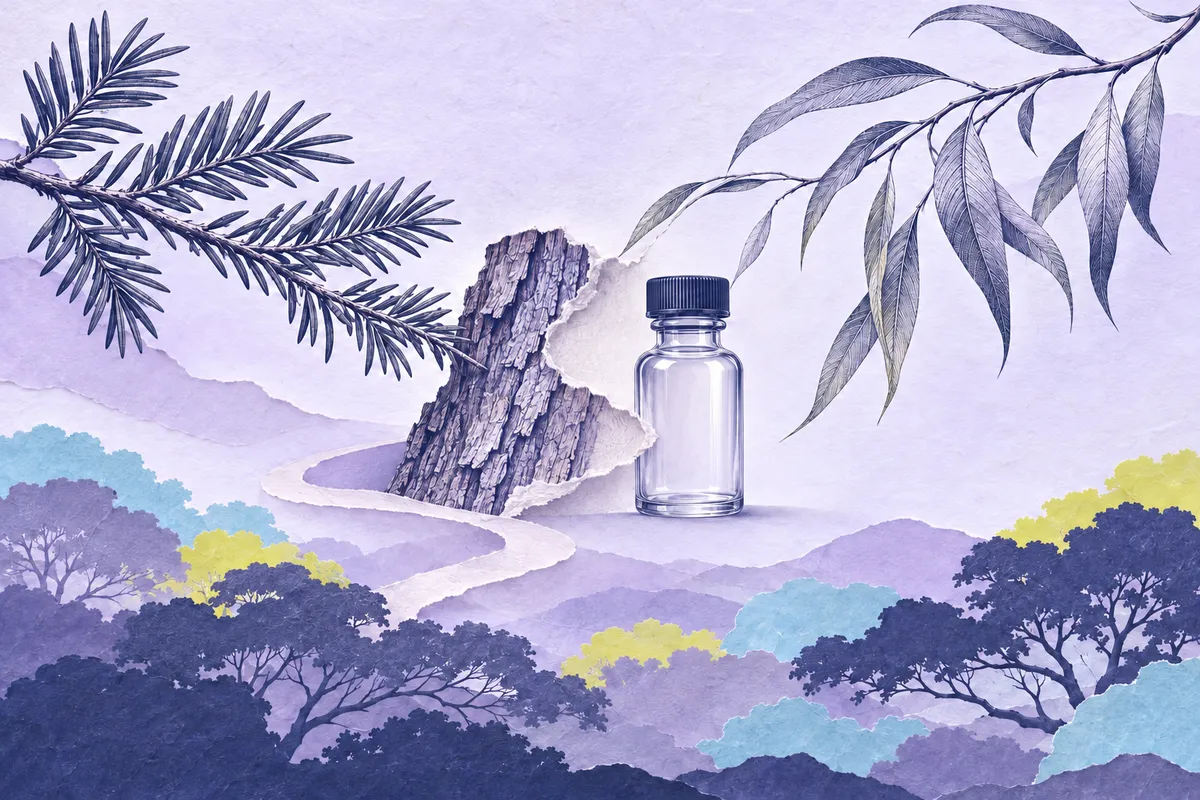
From yew and willow to a living tradition in El Magistral
A different way of looking at a tree trunk
A tree might catch our eye because of its shade, its fruit or the way the light falls on its bark. Sometimes it holds another story, of a substance that sparked someone's curiosity and eventually found its way into medicine. Looking closely gives us time to ask questions that won't fit on a nursery label.
Trees have yielded compounds used in medicines and have long played a part in healing traditions passed down through generations. Each story calls for a closer look. Which plant is used, which part, how is it prepared, and what do we actually know about its effects?
The long journey from tree bark to the hospital
Paclitaxel offers a remarkable example. Its story began with samples of bark from the Pacific yew, Taxus brevifolia, collected in 1962. Scientists isolated a substance with antitumor activity from those samples. Further research and clinical trials followed, and in 1992 the drug was approved in the United States. [1] Thirty years of work separate those two milestones. Nature offered a lead. Turning it into a prescription medicine took much more.
Willow has a nuanced history too. The European Medicines Agency recognizes clinical evidence for certain dry extracts of willow bark for short-term relief of lower back pain. Its assessment of other uses, such as relief of minor joint pain, draws on traditional use. [2] Even for a single plant, the evidence varies with the preparation and the condition being studied.
An isolated compound, a standardized extract and a homemade decoction each warrant their own evaluation. Plant products can also cause harm. Willow preparations may cause adverse effects and have contraindications. [2]
The madroño people know in El Magistral
In El Magistral, a community where we have a project, people commonly go up into the hills to gather madroño and boil it to make a traditional preparation for urinary tract health. The community knows the tree by its beautiful reddish trunk. We share this account of its traditional use as it was passed on to us.
Identifying the tree takes care. Madroño is a common name used for several species. Arbutus xalapensis is one of the species described in the Mexican flora as having reddish bark that peels off in sheets. [3] The resemblance offers a clue. Identifying the tree in El Magistral requires examining plant material and recording where it grows. Trunk color alone is not enough.
What the research has shown
A study published in 2019 found that ethanol extracts of leaves from Arbutus xalapensis showed activity against some bacteria in the laboratory. [4] That finding warrants further study. The researchers used alcohol to extract compounds from leaves. They did not test the preparation used in El Magistral or treat people with urinary tract infections.
There is experimental evidence for this species, but there is insufficient clinical evidence to say that the local preparation can cure an infection or dissolve urinary stones. Nor can we apply findings from other trees also known as madroño. The species, the preparation and the condition matter as much as the name.
Acknowledging these limits respects community knowledge without promising unproven results. A burning sensation when urinating warrants medical advice. If it comes with a fever or pain in your side or back, seek care promptly. These symptoms can occur with a kidney infection. [5]
Care for the trees and listen to the people who know them
For Global Lemon, this is also a question of conservation. Documenting, with permission, which species a community uses, which parts people gather and how they gather them can help protect people and trees alike. It is worth agreeing on harvesting practices that keep the plants alive and acknowledging the people who share their knowledge.
Conserving and restoring forests means caring for this diversity and understanding its role in community life. We can admire the beauty of a madroño and study its potential medicinal value with equal care. Thoughtful curiosity leaves room for both.
About the author
Global Lemon works alongside communities to conserve and restore forests. This article draws on that field experience and on the sources listed below.
Transparency statement
The use of madroño in El Magistral is presented as traditional knowledge shared with Global Lemon. The laboratory studies cited concern a specific species and preparation. They do not establish the clinical effectiveness of the local decoction.
References
- National Cancer Institute. History of the Developmental Therapeutics Program. Paclitaxel milestones, 1962 to 1992.
- European Medicines Agency. Salicis cortex. Evaluation of willow bark preparations.
- Rzedowski, G. C. de, J. Rzedowski and colleagues (2005). Flora fanerogámica del Valle de México. Second edition, first reprint. INECOL and CONABIO. Description of Arbutus xalapensis.
- Pérez-Narváez and colleagues (2019). Antimicrobial and antioxidant activity of ethanol extracts of leaves from Arbutus xalapensis Kunt, Mimosa malacophylla Gray and Teucrium cubense Jacquin. Tendencias en Docencia e Investigación en Química 5(5), 739–747. UAM repository.
- NIDDK, National Institutes of Health. Symptoms and Causes of Bladder Infection in Adults. Reviewed April 2024.