Forest Bathing: Learning to Listen Again
What does the research say about forest bathing, or shinrin-yoku, and its effects on stress, blood pressure and anxiety? Discover how to pause among the trees.
By Global Lemon, Editorial team ·
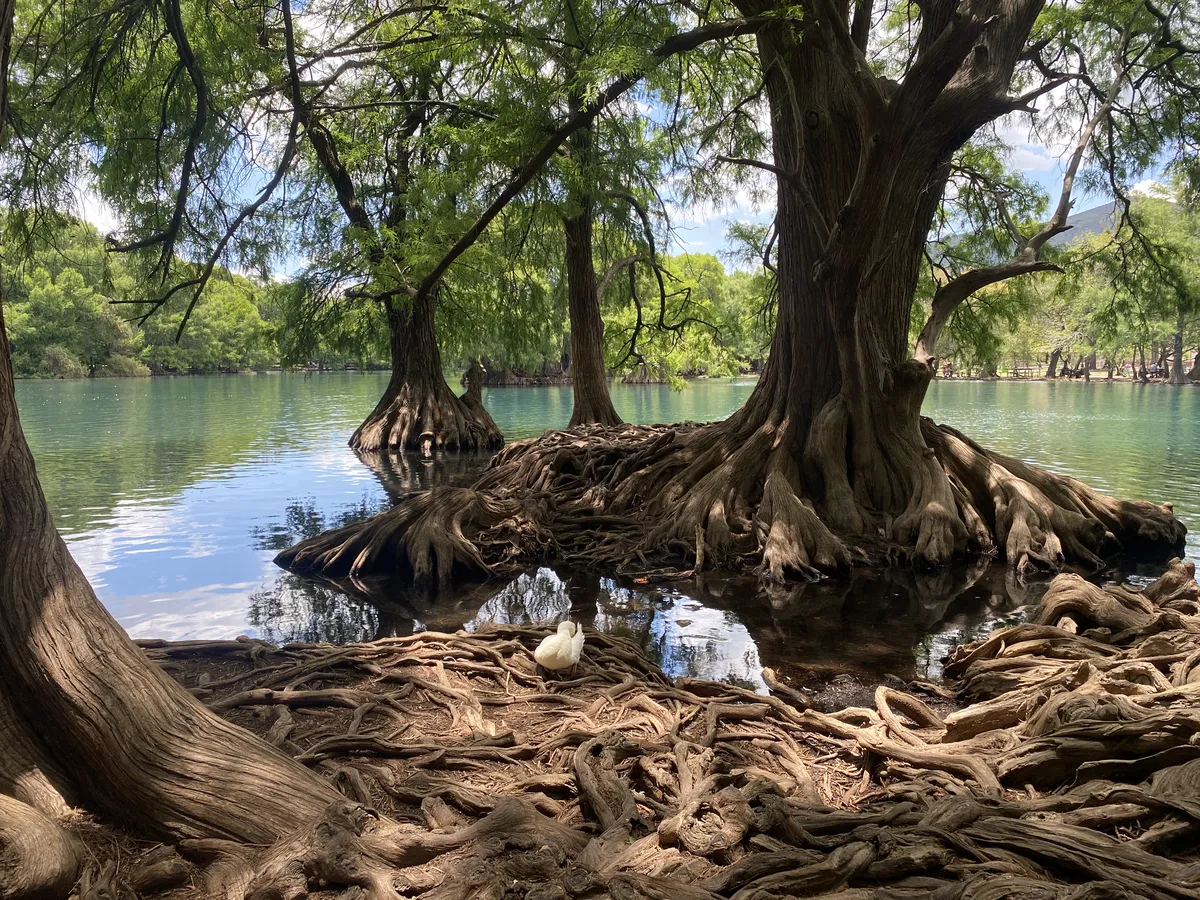
What shinrin-yoku research tells us about stress, blood pressure and anxiety
A walk where no one has to finish first
Step into a forest and your pace can change. Your eyes can follow a shadow instead of a notification. Your ears can pick out the rustle of leaves from a bird’s call. There is no need to turn this pause into another item on your to-do list. Simply pay attention to what’s happening around you.
In Japan, shinrin-yoku is the name for this immersion in the atmosphere of the forest. In English we call it forest bathing. [1] The expression invites us to picture ourselves surrounded by the landscape. Walk slowly, pause, look, listen. The shower can wait until you get home.
Calm is something we can study
The experience is simple. Studying it takes care. Is it the forest that helps, the walk itself, getting away from traffic, or just having time to rest? To get closer to an answer, researchers compare similar activities in different surroundings.
A Japanese study published in 2010 brought together field experiments with 280 male university students in 24 forests. Participants walked and sat looking at forest and urban landscapes, switching settings from one day to the next. Their salivary cortisol, pulse and blood pressure readings were lower in the forest than in the city. [1] The findings are consistent with short-term relaxation. A sample of young men cannot, by itself, represent the whole population.
A randomized trial published in 2025, also involving healthy men, found improved mood and lower cortisol after walking in a forest compared with walking in an urban setting. [2] Research continues, including into how long the changes last and which conditions favor them.
What a small difference in blood pressure means
A 2017 meta-analysis of 20 trials with 732 participants found that systolic blood pressure (the upper number in a reading) averaged 3.15 mmHg lower in forest settings than in comparison settings outside forests. Most of the activities lasted two hours or less. [3]
It helps to keep the result in perspective. It is an average across specific studies and exposures. It cannot tell us that any one walk will lower a person’s blood pressure by that amount or that forest bathing keeps hypertension under control over time. Enjoying the forest can be part of looking after yourself. It cannot replace medical assessment or prescribed treatment.
Anxiety in the moment
Researchers have also seen favorable changes in questionnaires about mood and momentary anxiety when healthy adults spent a day in a forest compared with a day under control conditions. [4] Feeling less tense after an outing is worthwhile in its own right. Relief lasting a few hours is a different finding from evidence that a treatment is effective for an anxiety disorder.
It is also hard to keep people from knowing whether they are surrounded by trees or buildings. Their expectations may affect their answers. [2] That limitation matters when interpreting well-being questionnaires.
A feeling our team knows well
Everyone on Global Lemon’s field team agrees on one thing: days spent walking the land, checking sites and mapping their boundaries bring a particular kind of peace. We often say they don’t feel like work. We’re fortunate to do these things in some of Mexico’s most beautiful forests.
It is work that calls for attention and responsibility. Still, looking up from the GPS and finding yourself surrounded by trees changes how the day feels. That is one reason forest bathing feels so familiar to us.
Let your senses set the pace
To try it, choose a trail that is open to visitors and suits your mobility. Walk at a comfortable pace and stop where you can do so safely. Notice how the light shifts. Listen for sounds nearby and far away. Feel the air and notice its scents, leaving plants where they grow and avoiding tasting anything. There’s no feeling you’re supposed to have and no distance you have to cover.
You might come home calmer. You might simply remember a bird. Paying attention can also draw us into caring for a place. A forest doesn’t have to pass a wellness test to deserve protection. We can enjoy it, respect its trails and leave room for the life that calls it home.
About the author
Global Lemon works alongside communities to conserve and restore forests. This article brings together that field experience and the sources listed below.
Disclosure
The outings described are part of the Global Lemon field team’s own experience. Health findings come from the cited studies and are presented with their limitations. This article is for general information and does not replace medical care.
References
- Park et al. (2010). The physiological effects of Shinrin-yoku (taking in the forest atmosphere or forest bathing): evidence from field experiments in 24 forests across Japan. Environmental Health and Preventive Medicine 15, 18–26.
- Ochiai et al. (2025). Randomized controlled trial on the efficacy of forest walking compared to urban walking in enhancing mucosal immunity. Scientific Reports 15, 3272.
- Ideno et al. (2017). Blood pressure-lowering effect of Shinrin-yoku (Forest bathing): a systematic review and meta-analysis. BMC Complementary and Alternative Medicine 17, 409.
- Morita et al. (2007). Psychological effects of forest environments on healthy adults: Shinrin-yoku (forest-air bathing, walking) as a possible method of stress reduction. Public Health 121(1), 54–63.