How Forests Regulate Heat: The Value of La Primavera Forest
How forests near cities help regulate heat through shade, water and conservation, with a closer look at Guadalajara and the nearby La Primavera forest.
By Global Lemon, Editorial team ·
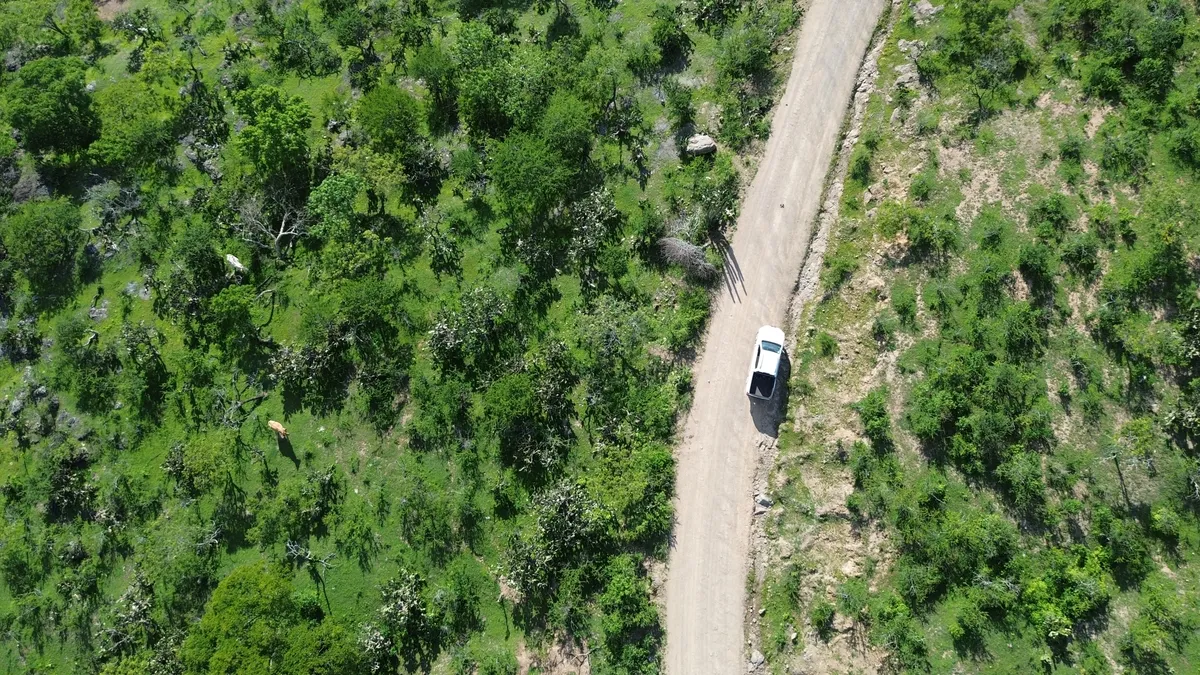
La Primavera offers a way to explore the relationship between forest restoration, heat and human well-being
Where the city and the forest meet
Step out of a sunlit plaza onto a wooded path and the shade can feel like a moment of relief. The light on your skin changes. The ground gives off less heat. That everyday experience offers a glimpse of something forests do quietly: they change the thermal conditions around them.
Near Guadalajara, Bosque La Primavera is a reminder that a city’s connections extend beyond its streets. The protected area’s management plan recognizes climate regulation as one of the services the forest provides. Conserving this neighboring forest is part of caring for a landscape we share. [1]
Asphalt and buildings store heat. When an urban area is warmer than its surroundings, it is known as an urban heat island. [3]
How a forest creates cooler conditions
Several processes help forests moderate temperature. The canopy intercepts sunlight and shades the understory. When water is available, plants release water vapor through transpiration, and moisture evaporates from the soil. Turning water into vapor consumes energy, helping to limit warming. Soil moisture and vegetation structure both influence the outcome. [2]
Air movement plays a part as well. Circulating air can carry cooler air into neighboring areas. How far it travels depends on the terrain, the wind and the layout of the built environment. Measurements in parks and forests around Paris show that temperature differences vary with the degree of air mixing and the time of day. [3]
Understanding these connections around La Primavera means considering the forest and its surroundings together, including slopes, forest edges and changes in land cover.
What a temperature difference tells us
A 2017–2018 study using sensors in temperate deciduous forests in Europe found that summer daily maximum air temperatures were, on average, 2.1 °C lower beneath the canopy than at the weather stations outside the forest used for comparison. That is a measurement of forest microclimate at the sites and under the conditions studied. [2]
Every figure deserves that kind of attention. Satellite observations of surface temperature measure the surfaces themselves. Air temperature requires a different measurement. It is also one thing to measure cooling inside a forest and another to determine how far it extends into a neighborhood several kilometers away. A meaningful comparison needs the time of day, season, distance and method.
What the local evidence says about La Primavera
A master’s study at the Universidad de Guadalajara analyzed hourly temperature and humidity records from the metropolitan area between 2015 and 2020, supplemented by suburban and rural weather stations. Its abstract reports less variation in temperature extremes around La Primavera than in densely built-up areas. These local findings are suggestive. On their own, they cannot establish a uniform cooling effect from the forest across Guadalajara. [4]
At Global Lemon, we specialize in forest planting and have a project in La Primavera. Working close to the forest gives us a responsibility to describe its value precisely and to distinguish ecosystem services from outcomes we have measured in our own work.
Staying safe in the heat
Excessive heat exposure can cause heat exhaustion and heatstroke and can worsen existing conditions. Shade and cooler surroundings offer some protection. Water, rest, suitable housing and attention to heat alerts also matter. [5]
During a day of forest work, adjust the schedule and the level of exertion to the conditions. If you feel weak or dizzy, stop working and find a cool place. Confusion or loss of consciousness calls for urgent medical help and cooling while help is on the way. Heat can still pose a risk under the trees. [6]
Cooling takes time, too
In La Primavera and other forests near cities, caring for the forest means conserving existing cover, protecting mature trees and preventing further fragmentation. It also means preventing damaging fires and restoring degraded forest sites in ways suited to their condition and the management of the protected area. [1]
Newly planted trees need years of follow-up as their canopies develop. Protecting the forest we already have and supporting its recovery go hand in hand. The coolness we feel depends on small connections among leaves, roots and moisture in the soil. Caring for them is a lasting responsibility.
About the author
Global Lemon works with communities to conserve and restore forests. This article draws on that field experience and the sources listed below.
Transparency statement
The temperature figures come from the studies cited and are presented in their original geographic and methodological context. Global Lemon’s experience in La Primavera is distinct from the ecosystem effects described in the research literature.
References
- CONANP. Programa de Manejo del Área de Protección de Flora y Fauna La Primavera. First edition, December 2000.
- Zellweger et al. Seasonal drivers of understorey temperature buffering in temperate deciduous forests across Europe. Global Ecology and Biogeography, 2019. DOI 10.1111/geb.12991.
- Haeffelin et al. Impact of boundary layer stability on urban park cooling effect intensity. Atmospheric Chemistry and Physics, 24, 14101–14122, 2024.
- Alamilla Chan, Daniel. Confort térmico en la Zona Metropolitana de Guadalajara y su relación con la morbilidad por enfermedades cerebrovasculares entre los años 2015 al 2020. Master’s thesis in Environmental Health Sciences, Universidad de Guadalajara–CUCBA, 2022.
- World Health Organization. Heat and health. Fact sheet updated July 31, 2026.
- World Health Organization. Heatwaves: how to stay cool.