Business Partnerships for Reforestation and Environmental Impact
Explore how businesses can work together on reforestation, build lasting environmental partnerships and measure what their projects achieve.
By Global Lemon Team ·
Key Takeaways
- Corporate reforestation partnerships bring together companies, nonprofits, communities, ejidos and public authorities to restore ecosystems with clearly defined objectives, responsibilities and metrics.
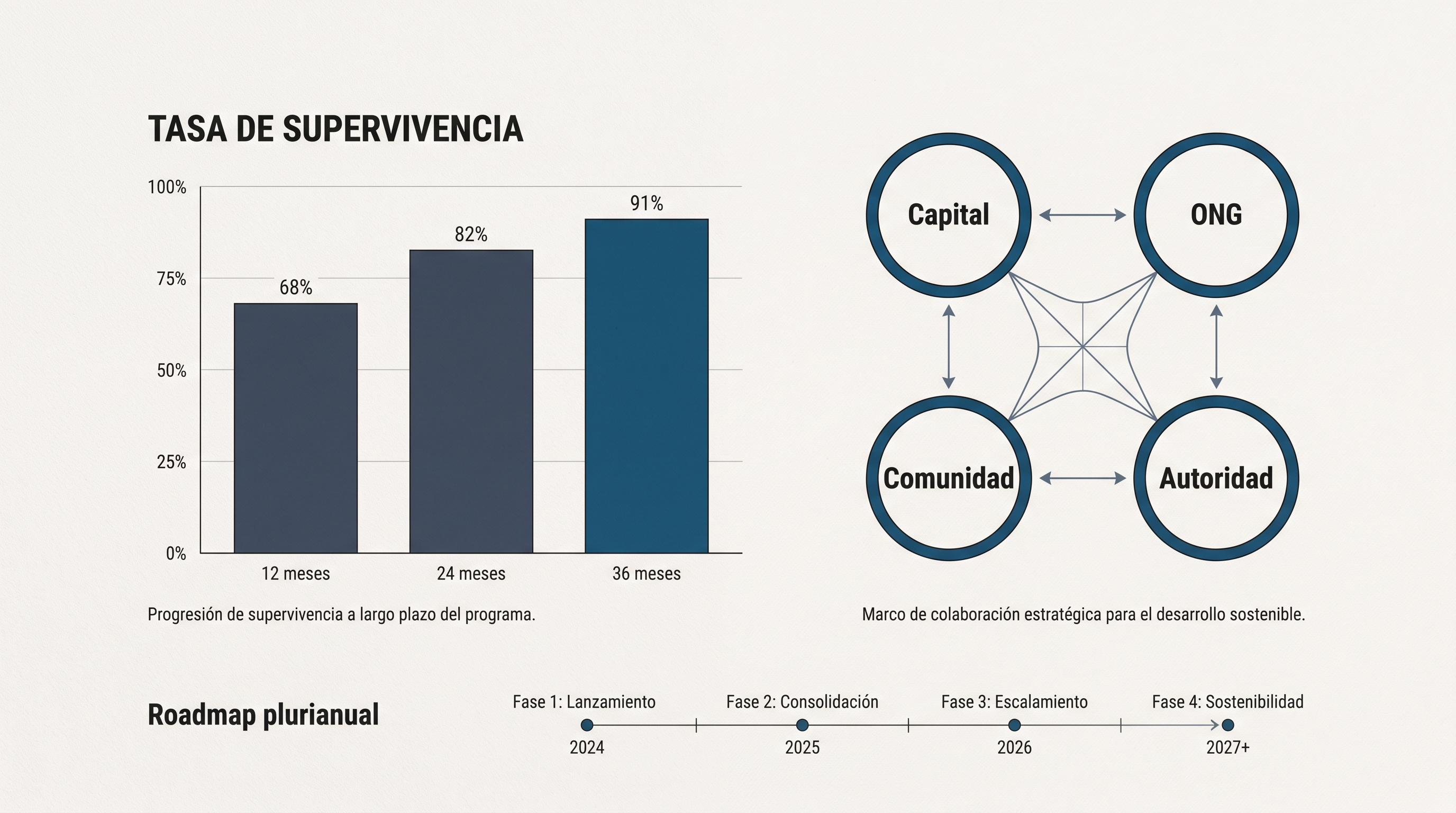
- The most credible indicator is the survival rate after 12, 24 and 36 months of maintenance, rather than the number of trees planted.
- Planting trees alone does not justify claiming carbon offsets. Such claims require independent verification under standards such as Verra VCS or Gold Standard [7].
- A credible partnership needs a multiyear budget, agreements with the community from the planning stage, and public reports that include losses and replacement planting.
Corporate reforestation partnerships are collaborations among companies, nonprofits, communities, ejidos and public authorities to restore ecosystems with clearly defined objectives, responsibilities and metrics. For CSR managers in Mexico and the United States, a strong partnership goes beyond planting trees. It includes suitable species, community participation, maintenance, survival rates and verifiable reporting.
Planting a tree is easy; caring for it for ten years is another story. That is why more companies are replacing one-off planting days with multiyear programs. A partnership works when it brings together four elements:
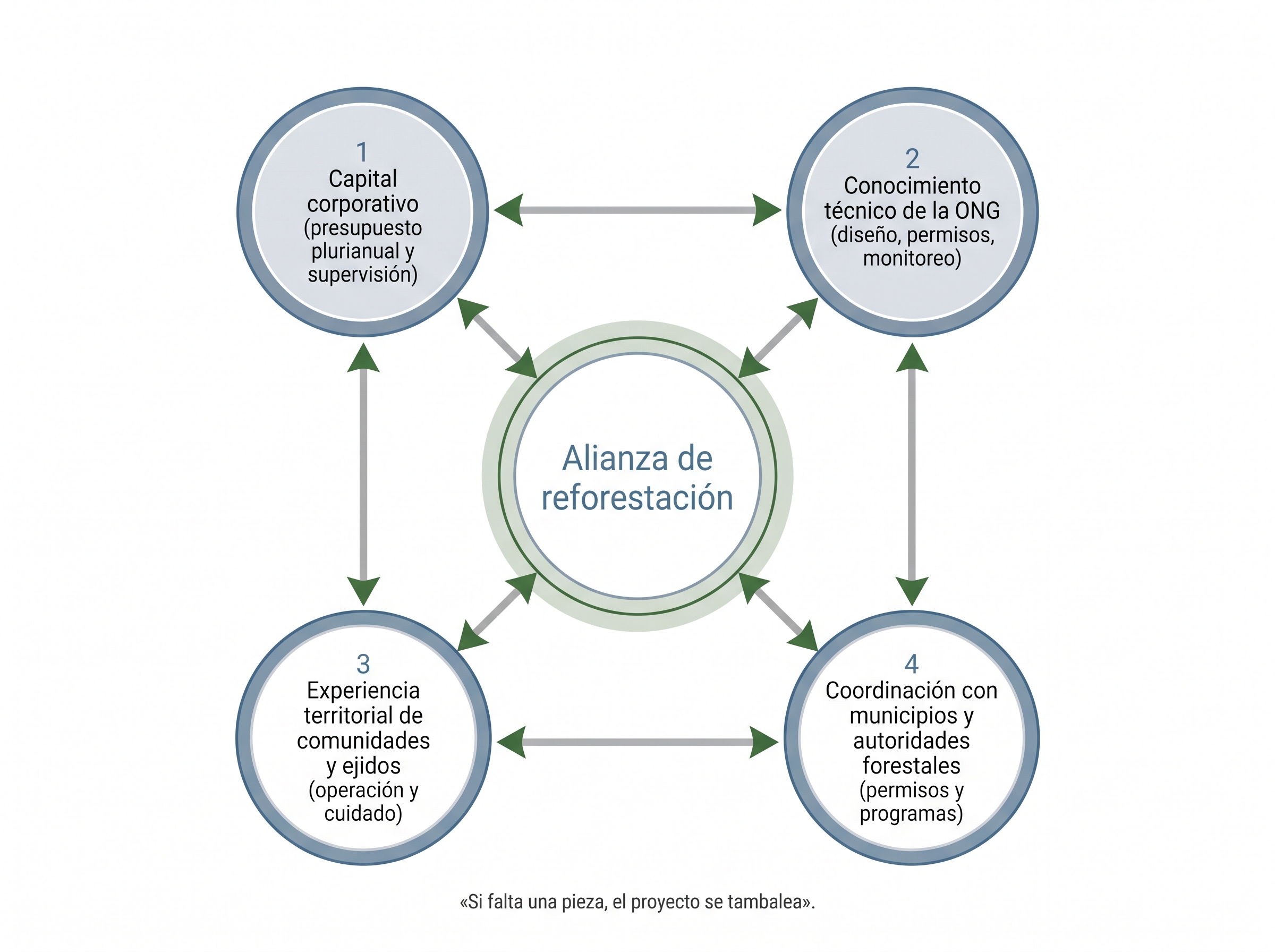
- corporate funding;
- a nonprofit's technical expertise;
- communities' and ejidos' knowledge of their land;
- coordination with municipalities and forestry authorities.
If any one is missing, the project becomes unstable.
The United Nations Environment Programme notes that the private sector can integrate ecosystem restoration into its business models, adopt efficient waste management practices and invest in sustainable solutions [3]. This guide covers partnership models, Mexican examples, community involvement, measurement, greenwashing prevention and a 12-month roadmap.
At Global Lemon, we approach restoration through community agroforestry and the PLANTING model. We explain our work clearly because restoring forests is among the best news a company can share, provided the results are real.
What Experts, Organizations and Communities Say About Corporate Reforestation
Public statements converge on one point: corporate reforestation creates value when it continues over time and delivers visible local benefits.
“The Fundación Chedraui–Nestlé partnership, for its innovative drone reforestation project, which has reached 400 hectares since 2019”
— from the post “Celebrating Corporate Involvement” on LinkedIn.
“BBVA Bancomer received the Forestry Entrepreneurship Promotion award for its Forest Enterprise Acceleration project through BBVA Momentum”
“Together, we can:
- Reduce soil erosion and prevent landslides
- Improve air and water quality
- Support the local economy”
— Imagen Media Noticias, on Facebook.
Three challenges regularly arise in CSR discussions:
- balancing corporate interests with the needs of ecosystems and communities;
- sustaining relationships with nonprofits and municipalities over the years;
- quantifying impact in ways that stakeholders can trust.
Projects that address these challenges successfully combine partnerships across sectors, clearly defined roles and technology, such as drones, to expand their reach and measure results.
How Corporate Reforestation Partnerships Work in Mexico
A partnership works when the company enters into an agreement for a specific area with environmental, social and governance objectives, rather than simply funding a planting activity. The challenge is to balance reputation, ESG targets and employee involvement with the needs of the people who live and work on the land.
Common Partnership Models
| Model | Company Contribution | Partner Organization's Contribution | Best Suited To | Risk to Manage |
|---|---|---|---|---|
| Restoration funding | Multiyear budget | Technical planning, permits, operations and monitoring | Small CSR teams | Confusing trees funded with trees surviving |
| Corporate volunteering | People, logistics and participation | Training, safety and site selection | Team building and employee engagement | Reducing the commitment to a single event |
| In-kind contributions | Tools, transport, technology or supplies | Integration into the local project | Companies with operational capabilities | Using unsuitable species or materials |
| Multicompany coalition | Funding and shared objectives | Coordination among several partners | Larger-scale programs | Lack of traceability for individual contributions |
| Community agroforestry | Investment, market access or ongoing support | Sustainable production and care for the land | Restoration that also supports livelihoods | Planning without local participation |
Environmental volunteering can be a memorable team-building experience, as explained by Reforestemos México. Even so, the planting day should mark the beginning of the commitment, not its end.
Bosques Sostenibles recommends aligning the company's purpose with the project schedule. This means considering brand objectives, locations, and internal and external audiences [5].
Agroforestry using native species is already a documented model. Alianza Biojuntos combines it with incentives for small and medium-sized sustainable producers and with community nonprofits [4]. This model addresses a central problem: enabling the forest to generate income for those who care for it.
Five Steps to Involve Communities From the Planning Stage
- Identify land tenure arrangements and the relevant ejido or community authorities.
- Ask about the area's production, environmental and social needs.
- Agree on clear compensation for forest crews and local workers.
- Agree on who selects the species and areas and sets the maintenance schedule.
- Establish indicators and shared decision-making mechanisms.
The “Socios por el Planeta” program brings together Nestlé, P&G and Sam's Club with Reforestamos México. In 2024, it worked with community forest crews in the State of Mexico, Jalisco and Nuevo León.
In Veracruz, Chedraui and Nestlé work with Ejido Las Vigas. According to Estrategia Sustentable, the target was to carry out drone reforestation across 150 hectares in Las Vigas de Ramírez during 2026.
Community participation should be agreed upon before corporate targets are announced. If it is negotiated afterward, the community receives a finished plan instead of helping shape it.
How to Measure a Reforestation Partnership's Environmental and Social Impact
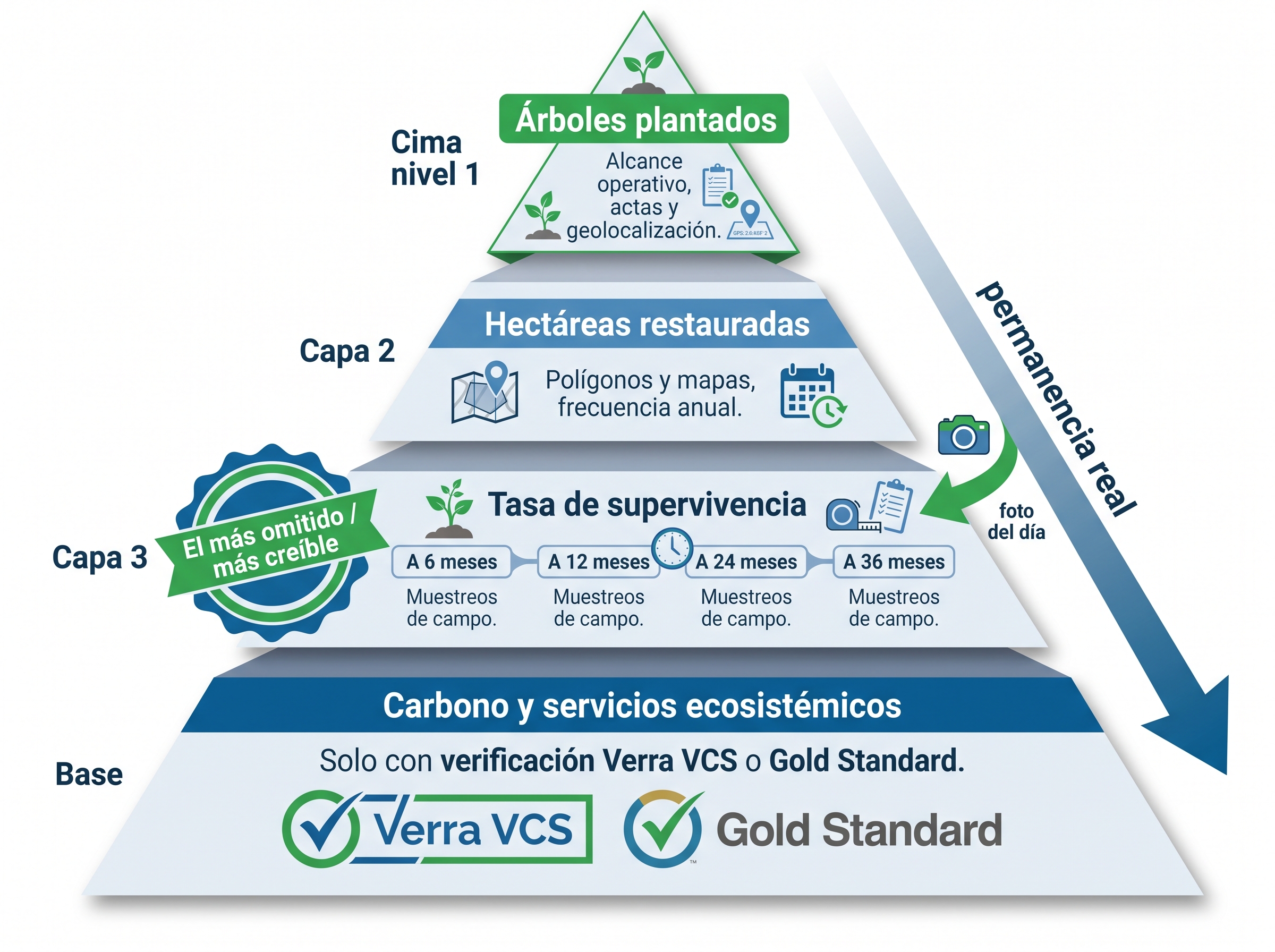
A partnership should measure four levels:
- trees planted;
- area restored;
- survival after maintenance;
- verified carbon or ecosystem benefits.
The number of trees planted is only a starting figure. Verra's VCS and Gold Standard, two widely recognized carbon standards, require independent verification [7].
A Four-Level Measurement Framework
| Level | Indicator | What It Shows | Recommended Frequency | Evidence |
|---|---|---|---|---|
| 1 | Trees and plants established | Operational reach | At the end of planting | Records, geolocation and species |
| 2 | Hectares restored | Geographic scale | Annually | Site boundaries, maps and technical records |
| 3 | Survival rate | Quality and longevity | At 6, 12, 24 and 36 months | Field sampling and comparable photographs |
| 4 | Carbon and ecosystem services | Climate and ecological contribution | As required by the methodology | Independent verification or a recognized standard |
Level 3 is the most frequently overlooked, yet it adds the most credibility. A survival rate measured at 24 months says more than any planting figure.
Comparison of Mexican and International Examples
| Partnership or Program | Reported Result | What Readers Should Verify |
|---|---|---|
| Fundación Chedraui–Nestlé | Ongoing reforestation since 2019, reaching 400 hectares according to the recognition cited | Annual breakdown, location, maintenance and survival |
| Chedraui–Nestlé, 2025 campaign | Drone reforestation in Veracruz and Puebla | Drone methodology and subsequent monitoring |
| MetLife–Reforestamos México | Collaboration since 2019 and recognition as “Partner of the Year 2024” | Number of surviving trees, sites and continuity |
| HEINEKEN México | Volunteer events involving endemic trees and plants during 2024 | Distinguishing volunteer participation from ecological outcomes |
| Priceless Planet Coalition | Faster forest regeneration, according to Northern Arizona University researchers | Methodology, study area and applicability to the Mexican context [8] |
What a Quarterly Dashboard Should Include
- Hectares restored and native species used.
- Survival and maintenance activities.
- People trained and community jobs created.
- Financial and in-kind contributions.
- Geotagged and dated photographs.
- Recorded incidents and corrective action.
Precision matters when discussing carbon. Verra VCS and Gold Standard provide reference frameworks when a project seeks to report carbon credits [7]. Planting trees alone does not justify claiming climate offsets.
Transparency improves when a company also reports losses, replacement planting and limitations. These reports are the best defense against greenwashing.
How to Avoid Greenwashing in a Reforestation Partnership
Answer five questions before signing:
⚠️ The Costliest Mistake Is Signed in Year 1
A partnership becomes greenwashing when the contract covers the planting photo opportunity but leaves no one responsible for watering, replacement planting and monitoring in years 2 and 3. Before announcing targets, confirm who manages the land and what information a third party could audit; Cemefi does not replace that forestry due diligence.
- Who will carry out the project?
- Who owns or manages the land?
- What methodology will be used?
- How will the planting be maintained?
- What information can a third party audit?
Maintenance provides the clearest evidence. Fundación Chedraui reported maintaining 109.5 hectares during 2020 and 2021, after planting. That figure matters because it shows that a credible partnership budgets for the years following planting, not just the photo opportunity.
An Eight-Point Checklist for Evaluating a Nonprofit or Environmental Partner
- Legal identity: registered name, address and project leads.
- CLUNI and tax status: registrations applicable to the organization.
- Authorized donee status: confirm whether it can receive tax-deductible donations and under what conditions. Check this with your tax advisor.
- Local experience: previous projects in Mexico, communities served and species used.
- Land tenure: identify the responsible ejido, community, landowner or authority.
- Maintenance plan: a schedule for watering, replacement planting, fire prevention and monitoring.
- Indicator system: survival data, area in hectares, species and georeferenced evidence.
- Responsible communication: reject claims of “full offsetting” without independent climate verification.
Warning signs
- Promises of “one tree per purchase” with no verifiable planting location.
- Using “tree planted,” “surviving tree” and “tonne of CO₂” interchangeably.
- Photographs with no date, coordinates or species identification.
- No agreement with the communities or ejidos involved.
- Results that cover only a single volunteer day.
- Reports that omit losses and replacement planting.
- Certification claims that leave the scope of the certification unclear.
The role of Cemefi and independent standards
Cemefi can be one source when assessing a philanthropic partner. A forestry project still requires technical due diligence. Verra and Gold Standard are reference standards for verified climate projects [7]. A planting campaign does not automatically qualify for their endorsement.
Transparency makes communication more credible. Once you have vetted the partner, the next tasks are scheduling the work and agreeing how it will be governed.
A 12-month plan for building a lasting business partnership
A lasting partnership needs at least 12 months for preparation, implementation and initial evaluation. The goal is a program with a multiyear budget, clear governance and continuing involvement in the area. MetLife has worked with Reforestamos México since 2019. Its continued involvement earned it the organization’s “2024 Partner of the Year” recognition.
Implementation schedule
| Time frame | Activity | Deliverable |
|---|---|---|
| Months 1–2 | Define ESG objectives, the budget, the project area and who is expected to benefit | Project scope and success criteria |
| Months 2–3 | Assess the nonprofit, municipality, ejido and technical partners | Due diligence matrix |
| Months 3–4 | Assess soils, species, land tenure and risks | Environmental and social baseline |
| Months 4–5 | Sign agreements and assign responsibilities | Agreement with indicators and provisions for continuity |
| Months 5–6 | Train field crews and organize logistics | Operations and safety plan |
| Months 6–7 | Carry out planting or restoration | Georeferenced record |
| Months 8–9 | Maintain the site and replace lost trees | First survival report |
| Months 10–11 | Involve employees, customers or suppliers | Volunteer and communications program |
| Month 12 | Evaluate results and approve the second year | Public report and plan for continuing the work |
Check the local rainy season before setting the corporate calendar. It’s easier to move an internal event than to move the weather.
Coordinating the company, nonprofit, municipality and ejido
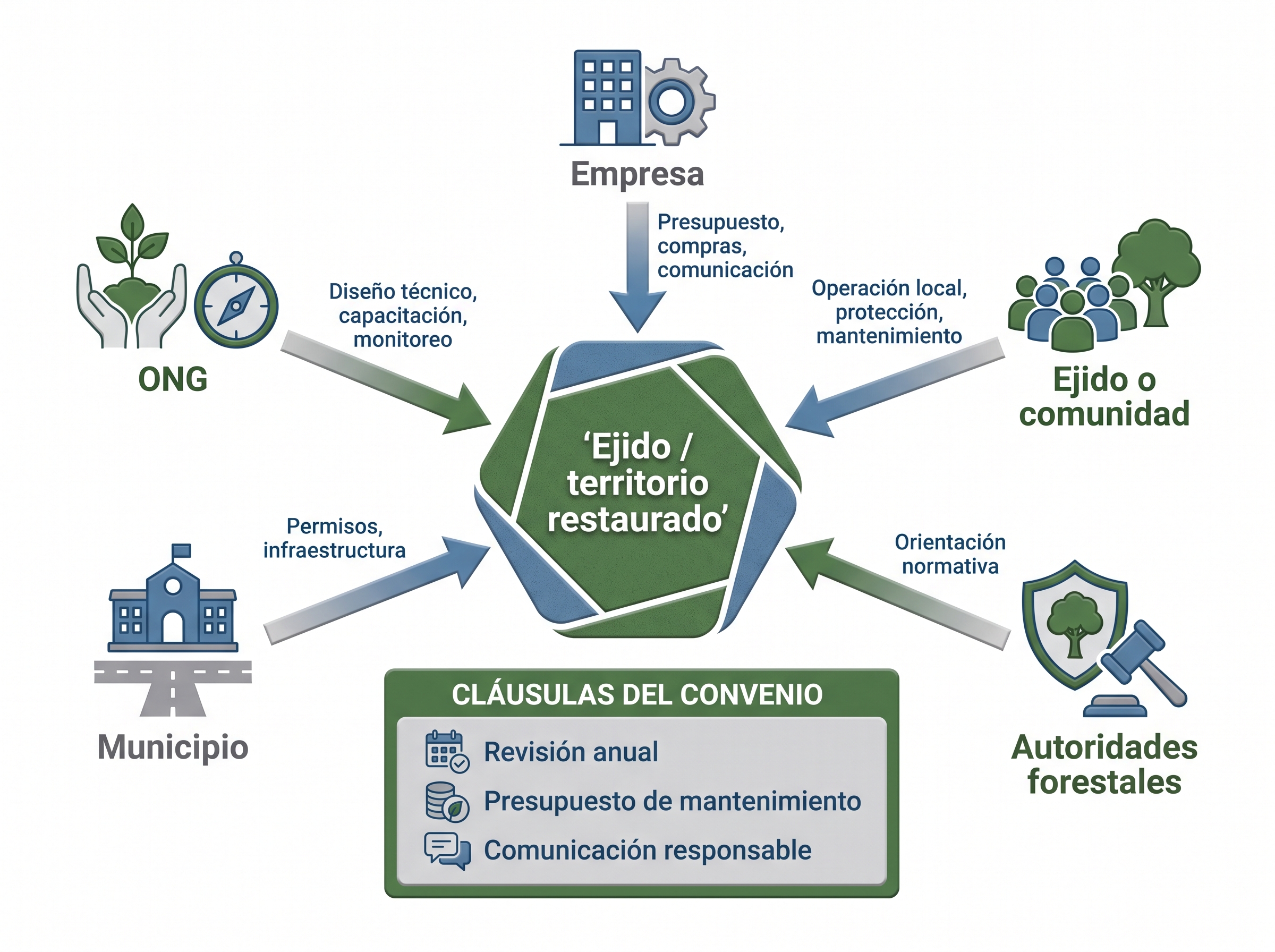
- Company: budget, purchasing, volunteers, communications and oversight.
- Nonprofit: technical design, training, monitoring and reporting.
- Ejido or community: local knowledge, field operations, protection and maintenance.
- Municipality: permits, coordination among institutions, infrastructure and local contacts.
- Forestry authorities: regulatory guidance and coordination with public programs.
Examples in practice
In Las Vigas de Ramírez, Chedraui and Nestlé planned work on 150 hectares together with the ejido and municipal government. It is an example of several partners coordinating in one place.
The partnership between Audubon and Reforestamos México shows how a partner can contribute technical expertise in bird conservation. The financial sector also plays a part. Reforestamos México has recognized partners including BBVA Bancomer.
Include three things in the agreement:
- an annual review;
- a maintenance budget;
- provisions for responsible communication.
These help keep a partnership going when people change roles within the company.
The Mexican institutions that can guide a reforestation partnership
Two institutions are central to Mexico’s framework:
- SEMARNAT, which coordinates national environmental policy, and
- CONAFOR, which contributes to forestry and restoration programs and provides technical guidance.
Mexico’s NDC 3.0 proposes strengthening Payments for Environmental Services as a central strategy for encouraging green jobs in communities and cooperation across institutions [10].
Probosque is a state-level source for projects and calls for applications in the State of Mexico. Verify each call with the official source. For SISFOR, check current official forestry information platforms for its definition, scope and available data.
At the global level, IUCN documents the goal of restoring 30% of ecosystems by 2030 and the role of the private sector in that effort [2]. WWF Mexico supports working groups under its restoration program. Monitoring helps them adjust actions, strengthen public policy and sustain conservation over time [1].
Frequently asked questions about business partnerships for reforestation
What is a reforestation company?
It is an organization that designs, funds or carries out forest restoration and land management projects. These organizations can be nonprofits, consultancies, social enterprises or specialist institutions. Before hiring one, check:
- its local experience;
- the status of the land;
- the species it uses;
- its maintenance plan;
- how it reports survival and impact.
How long should a reforestation partnership last?
It is advisable to plan for at least three years. The first year covers preparation and planting. Later years cover maintenance and survival checks at 24 and 36 months, when partners can assess whether restoration has worked.
When does Probosque open applications for 2026?
Dates depend on the official call Probosque issues for each program. Check dates directly. Old publications or third-party announcements can be out of date. Consult the official portal for requirements, eligible municipalities, documents and registration dates.
Which companies support the environment through reforestation?
Companies contribute funding, volunteers and technology, and they join coalitions with nonprofits. Documented examples in Mexico include Chedraui–Nestlé, MetLife and HEINEKEN México. Assess their involvement by looking at continuity, survival, transparency and community benefits alongside the announced tree count.
Which institution protects trees and forests in Mexico?
Several institutions are involved in forest protection.
- SEMARNAT coordinates environmental policy.
- CONAFOR works on forestry matters.
- State and municipal authorities play roles within their jurisdictions.
Ejidos and communities also play essential roles when they own or manage the land where restoration takes place.
How can I volunteer for reforestation in Mexico City?
Look for calls from nonprofits, borough governments, environmental authorities or companies running verifiable programs. Confirm the location, date, species, safety measures, transport, tools and follow-up. For a corporate event, choose a program that combines the day in the field with training and monitoring.
What is SISFOR?
SISFOR is a forestry information system. Check the current institutional source for its precise scope. Before citing it in a project, confirm:
- what data it provides;
- who manages the data;
- its geographic coverage;
- its intended use, whether for reference, monitoring, planning or reporting.
SISFOR should never be presented as certification of a partnership.
Limitations, alternatives and professional guidance
The number of trees planted and the number that survive are different measures. Carbon benefits depend on methodology, permanence, additionality and verification. Public calls for applications vary by state, budget and fiscal year.
Restoration does not always mean planting. It can include:
- assisted natural regeneration;
- soil conservation;
- invasive species control;
- agroforestry.
According to UNDP, since 2022 Camposol has implemented a biodiversity plan covering about 1,628 hectares in Uruguay, combining forest restoration with the management of exotic and invasive plants [9].
Note: this article is for information. For technical, legal and tax advice, consult local forestry specialists, lawyers and tax professionals before signing agreements, deducting donations or announcing carbon offsets. Global Lemon and its PLANTING model offer one way to collaborate. We report only results that the project has actually measured.
Conclusion
Business partnerships for reforestation work when corporate goals respond to real community needs. Assess their quality through tree survival, maintenance, area in hectares, native species, local jobs and transparency.
The Mexican examples bear this out. MetLife and Chedraui–Nestlé have kept their programs going since 2019. That continuity makes it possible to achieve results that a single event cannot.
To get started:
- Choose the partnership model that fits your team’s capacity.
- Vet your partner using the eight-point checklist.
- Reach agreement with the community before announcing targets.
- Measure survivalalongside planting numbers.
- Follow the 12-month plan with a budget for the second year.
Mexico’s forests need partners more than they need another photo.
If your company wants to restore forests alongside communities, measure progress and bring joy to the work, let’s do it together. Explore our PLANTING model, visit our projects or contact Global Lemon to design a partnership around your goals.
About the author
We are the Global Lemon team. We write about restoration and reforestation partnerships to explain the work clearly and help you make decisions with reliable information.
Transparency statement
This article draws on public information from Fundación Chedraui, Nestlé México, Reforestamos México, HEINEKEN México, MetLife, UNEP, UNDP, IUCN, UNFCCC, WWF Mexico, Mastercard, Audubon and the other sources identified in the text and references. The figures reflect the scope and limitations reported by each source. They do not constitute an independent audit of the projects discussed.
References
[1] 2025 Annual Report — WWF Mexico’s institutional report on long-term monitoring and conservation.
[2] FM6. V3F. Spanish — IUCN document on the 2030 restoration goals and the private sector.
[3] Seven ways to stop desertification… — UNEP on ecosystem restoration and the private sector.
[4] Our Work — Reforestation with native species and community partnerships.
[5] Corporate social responsibility and environmental events… — Aligning reforestation with a CSR strategy.
[6] How CSR benefits businesses and communities… — The benefits of CSR for companies and communities.
[7] SDG 13: Climate Action for Businesses — Verra VCS and Gold Standard, and independent verification.
[8] Reforestation after wildfires… — The Priceless Planet Coalition and accelerating forest regeneration.
[9] Policy and Institutional Review (PIR) – Uruguay — UNDP BIOFIN on business biodiversity plans.
[10] Mexico’s NDC 3.0 (PDF in Spanish) — Mexico’s NDC 3.0 under the UNFCCC, Payments for Environmental Services and green employment.