How to Claim a Tax Deduction for Gifts to Authorized Charities in Mexico
Learn how to check a charity’s authorization with Mexico’s tax authority (SAT), understand the tax benefits of giving and obtain a donation receipt.
By Global Lemon Team ·
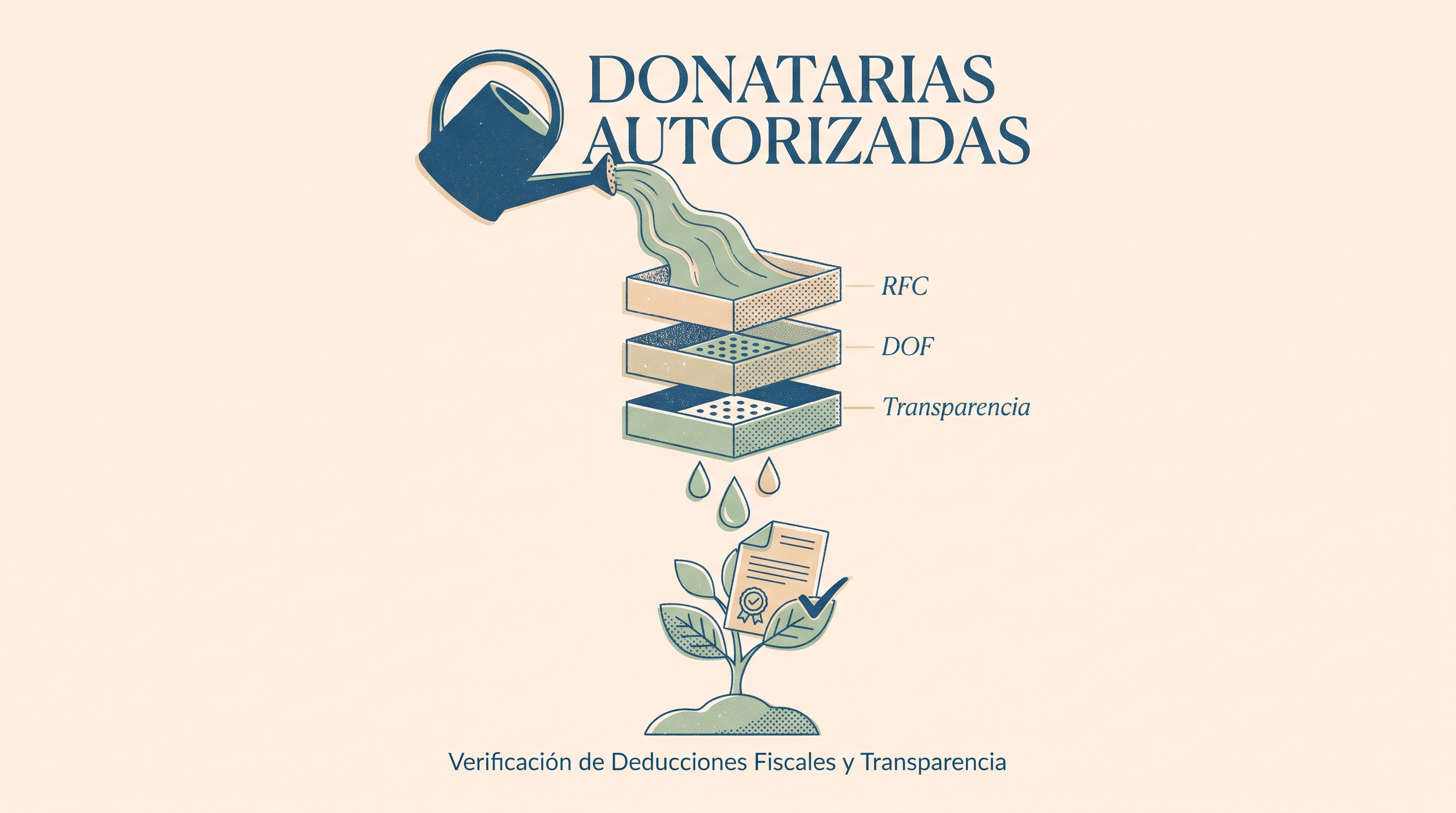
Quick answer: An authorized donation recipient is a civil society organization or trust that Mexico’s tax authority (SAT) authorizes to receive contributions deductible for income tax purposes. Before donating, take three steps:
- Verify its taxpayer identification number (RFC) and authorized activity in the official directory.
- Check its status in the Official Gazette of the Federation (DOF).
- Review its public transparency information.
To qualify for a deduction, the contribution must meet the tax requirements. For individuals, the applicable statutory cap also applies. If you support an environmental cause, check that the authorized activity matches the project you plan to fund.
Introduction
Can you deduct a donation to plant trees? It depends. Supporting an environmental cause alone does not qualify. The organization needs current SAT authorization, and the contribution must meet the tax requirements [1].
An association can do valuable environmental work and still lack authorization to receive deductible donations. Neither its legal form nor its cause guarantees eligibility.
This guide explains:
- what an authorized donation recipient is;
- how environmental activities qualify;
- how to check whether authorization is current;
- what tax benefit applies to individuals and businesses;
- which compliance failures can put authorization at risk.
The reference year is 2026. The register changes: in 2025 the SAT reported 270 revocations among more than 10,000 authorized recipients [1]. Check again close to the date you plan to donate.
What people who work with authorized recipients say
Compliance has become more demanding. The following posts reflect their authors’ views and do not constitute official interpretations.
According to Cemefi, the 2026 Miscellaneous Tax Resolution “introduces new provisions for authorized donation recipients that raise the level of” compliance required. — Cemefi, on X
“Complying today protects the future of your organization.” — Colegio de Contadores Públicos de México, on X
“Are your organization’s accounting, tax and documentation processes really aligned? Identify risks and opportunities for improvement.” — Colegio de Contadores Públicos de México, on X
What are authorized donation recipients, and how do environmental organizations qualify?
Authorized donation recipients are civil society organizations or trusts that the SAT has authorized to receive contributions deductible for income tax purposes [1]. Their stated purpose and activities must fall within Mexico’s Income Tax Law (LISR).
Being a civil association does not automatically confer tax authorization. An A.C. is a legal form. Authorization is a separate status that the organization must apply for, substantiate and maintain.
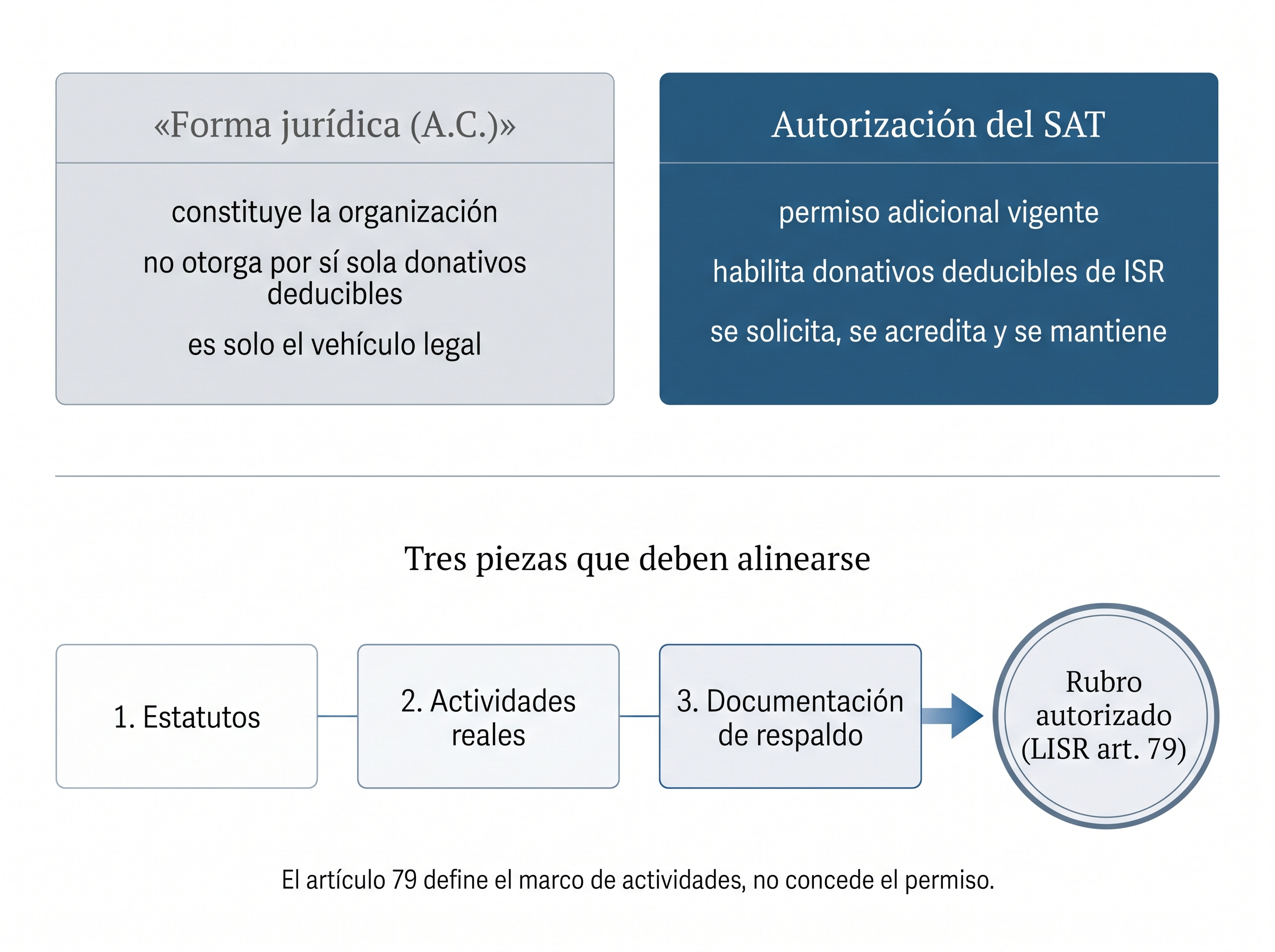
Article 79 of the LISR sets out the categories of nonprofit legal entities [3]. For environmental organizations, sections XIX and XX concern environmental protection and the preservation or restoration of ecological balance, subject to the applicable legal requirements. Article 79 defines the types of activities covered. It does not automatically grant authorization.
An environmental organization must show that three things match the category it applies for:
- its bylaws;
- the activities it actually carries out;
- the documentation substantiating both.
Depending on the case, evidence from the competent authority may be required, such as a prior opinion from SEMARNAT for certain environmental purposes.
Example: donations to Global Lemon’s reforestation and restoration projects go through The Tree School A.C., an authorized recipient whose status was confirmed in the SAT directory on October 22, 2026. You can explore the restoration projects and the Bosque de la Primavera project. We recommend checking the official register yourself, since an organization’s status can change.
The legal category is the first thing to check. Then check whether the authorization is current.
How do you check an authorized recipient before donating?
Verify its RFC, its authorized activity and its current status. The organization’s name or an old mention on its website is insufficient.
| Tool | What to check | How to use it |
|---|---|---|
| SAT directory | RFC, legal name and authorized activity | Confirm that the organization and activity category match |
| SAT transparency portal | Public reports on the use and destination of donations | Review information published by the organization |
| DOF and SAT lists | Revocations, cancellations and changes | Identify changes since an earlier search |
Four steps to verify authorization
- Request the RFC of the organization.
- Look it up in the current directory and confirm that the authorized category matches the project you plan to support.
- Review the DOF and SAT publications for changes or revocations.
- Request the electronic tax receipt (CFDI) for the donation and check that it reflects the actual transaction.
Check authorization against the official publication rather than relying on the organization’s word.
Common mistakes:
- donating on the strength of the organization’s name alone;
- relying on an old PDF;
- consulting registers from 2021 or 2022.
Always check the current records.
For perspective, Mexico has more than 47,000 civil society organizations and about 10,000 authorized donation recipients, according to Corresponsables [6]. Most civil society organizations therefore do not issue tax-deductible receipts. The 270 revocations in 2025 [1] provide context. They do not predict the status of any particular organization. The SAT’s open data reports can be used to check tax status, but do not measure environmental impact.
What tax benefit can an individual or business receive for donating?
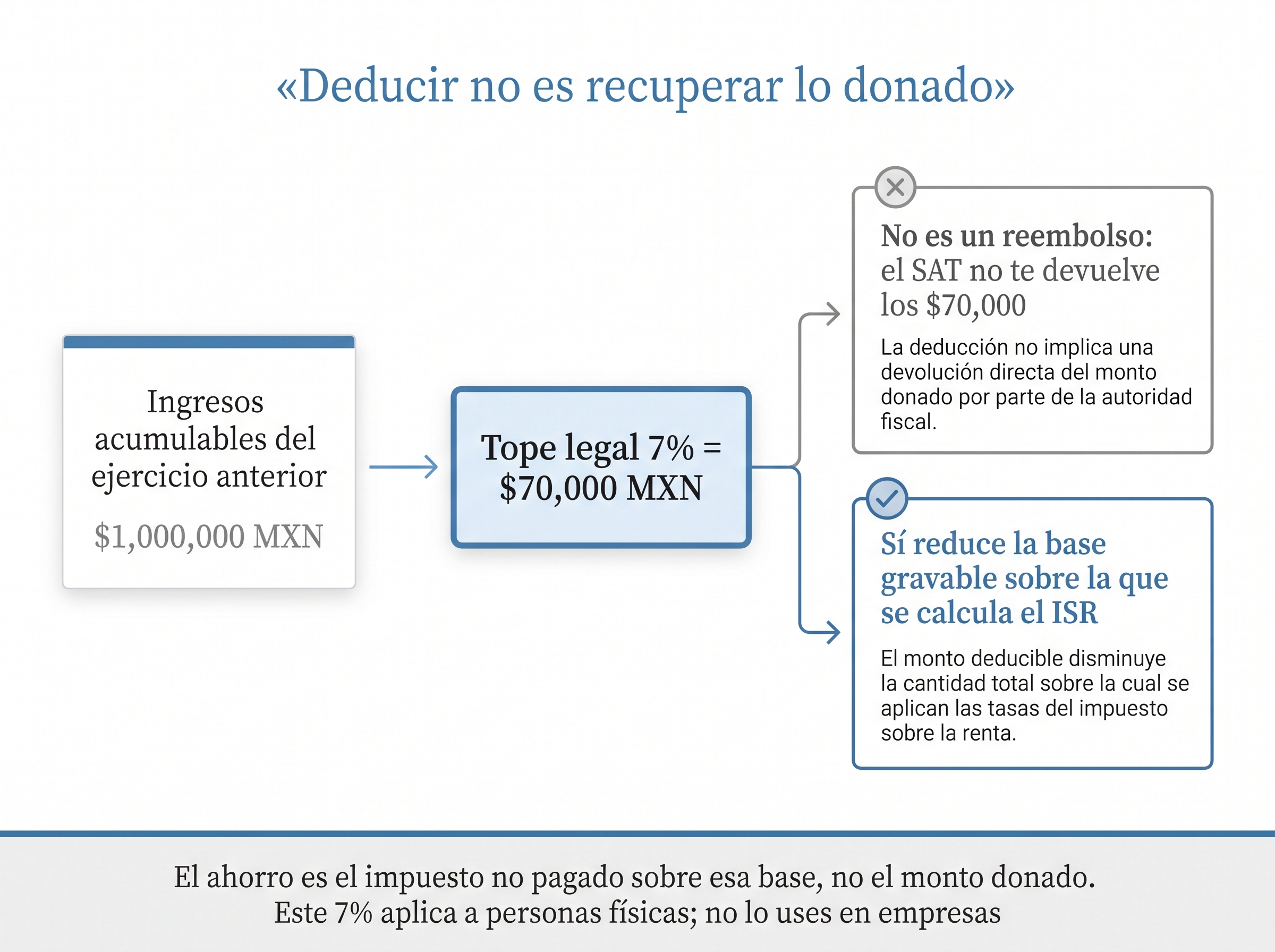
Authorization allows a qualifying donation to be deducted. Claiming a deduction does not mean that the SAT refunds the donation. The rules also depend on the type of taxpayer.
Individuals
The LISR and the SAT’s guide to personal deductions set a cap of up to 7% of the previous tax year’s cumulative taxable income, subject to the applicable requirements and tax regime [3].
Example: if your cumulative taxable income last year was MXN $1,000,000, your reference cap is MXN $70,000 (7%). Deducting MXN $70,000 does not return that amount to you. It reduces the base used to calculate your tax.
Businesses
Do not apply the individual 7% calculation to a legal entity. If you manage corporate social responsibility (CSR), confirm the applicable rules with your tax department.
For context, DEACERO reported MXN $34.4 million in monetary donations to civil society organizations in 2025 [7]. This is its statement of social investment. It is not evidence of deductibility.
Steps for any donor
- Check that the authorization is current.
- Make the donation without receiving anything in exchange, whether compensation or other consideration.
- Provide your correct taxpayer information.
- Request the donation CFDI with its designated supplement.
- Keep the receipt and review how the donation is treated in your tax return.
There is no universal CFDI use code. Confirm the code with the SAT and the recipient when the receipt is issued, using the actual transaction and the current catalog. Treat promises of guaranteed tax savings with caution.
What obligations must recipients fulfill, and what can put their authorization at risk?
Receiving tax-deductible donations entails ongoing obligations [2]:
- use funds for the authorized purposes;
- submit the required tax information and transparency reports;
- keep verifiable documentation;
- respond to SAT requests.
Failure to comply can trigger revocation proceedings.
Three key duties
- Use funds for the authorized purposes.
- File returns and reports, including the transparency information in Annex 2 of the Miscellaneous Tax Resolution (RMF) [8].
- Keep up-to-date documentation supporting the organization’s activities and compliance.
The 2026 RMF details the procedures for authorization and for Article 82-Quáter of the LISR, including verification that the information return has been completed [9]. The Colegio de Contadores Públicos de México notes changes and increased oversight [10].
One frequently misunderstood point: according to Nelti, the 10% and 50% thresholds apply to specific circumstances under rule 3.10.1.25, not to every authorized recipient [4]. Do not treat them as a general cap.
The SAT provides for a hearing and an opportunity to correct irregularities, so revocation is not always automatic [1]. Cemefi published a guide to the obligations of civil society organizations [5]. It is educational material and does not have the force of law.
Something donors can look for: organizations that publish transparency reports on time and account clearly for their use of funds are generally at lower risk of losing their authorization.
What to consider before donating to an environmental organization
Tax authorization and impact need separate checks. A valid RFC does not prove that a project restores a forest or reports results. Before donating, review:
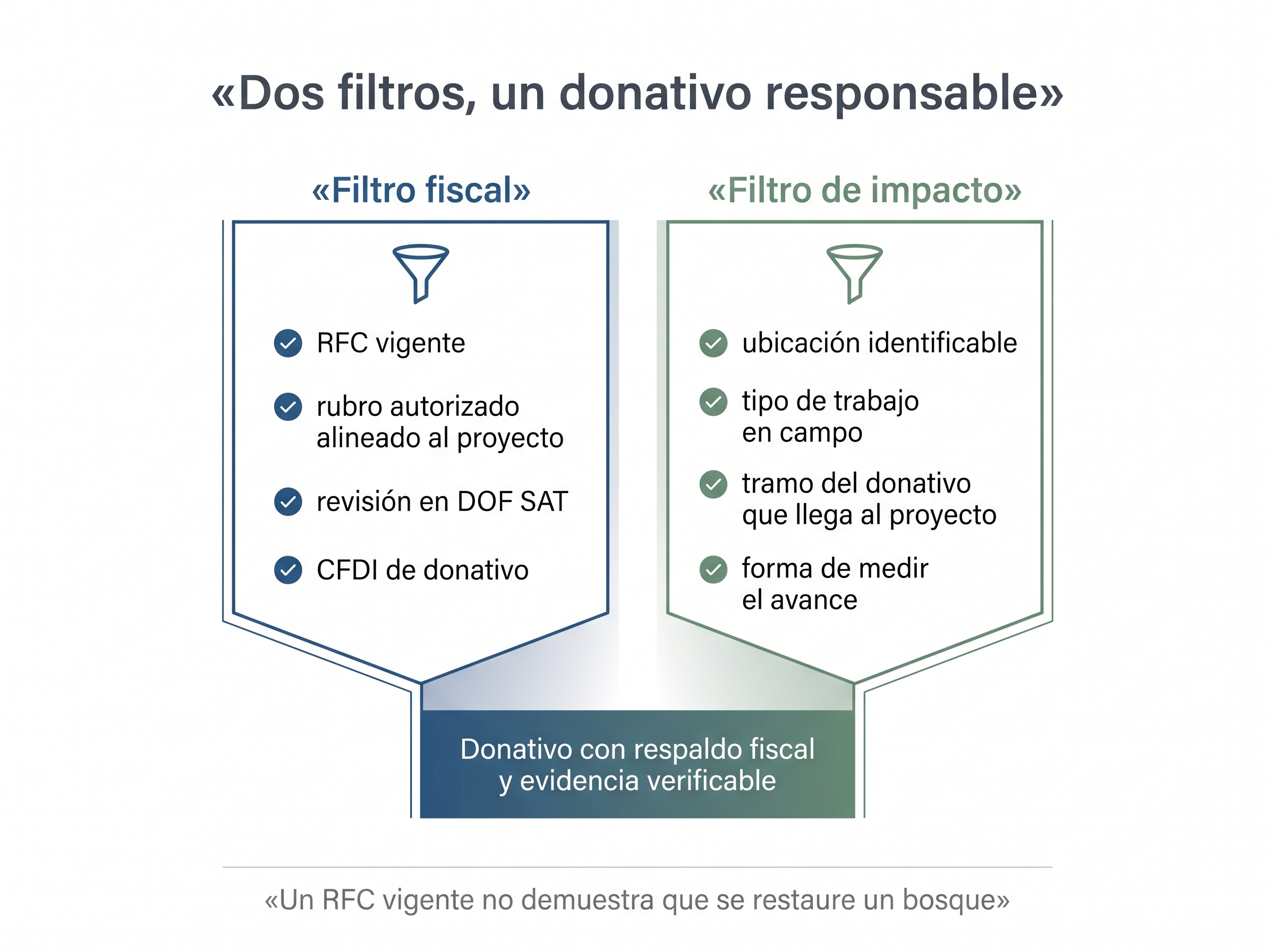
- Location: where the project takes place and whether you can identify the site.
- Activities: what is done, such as planting, maintenance or work with communities.
- Use of the donation: how much goes directly to the project.
- Measurement: how progress will be reported and how often.
If you manage CSR, make sure the recipient’s authorized activity matches what you will report as social investment. At Global Lemon you can review our transparency information. For large amounts or questions about your taxes, seek individual tax advice.
Frequently asked questions
What is an authorized donation recipient?
It is a civil society organization or trust authorized by the SAT to receive contributions deductible for income tax purposes [1]. Forming an A.C. or supporting an environmental cause is insufficient on its own.
Which entities can receive tax-deductible donations?
Only those meeting the applicable tax requirements and holding current authorization. Before donating, verify the RFC, current status and authorized activity in the SAT directory and official publications.
What does Article 79 of the LISR say?
It describes categories of legal entities that are not income taxpayers and includes environmental categories [3]. Consult the current text and all its requirements rather than relying on the section number.
What CFDI use code applies to a donation?
It depends on the transaction. Check the use code and your taxpayer details with the recipient and against the current SAT catalog. Before reusing a code, check that it applies to your case.
What are three obligations of an authorized recipient?
Use resources for authorized purposes, file tax returns and transparency reports, and retain supporting documentation [8].
How much income tax is due on a donation?
Donating does not by itself generate income tax payable by the donor. An eligible donation may reduce your taxable base, subject to limits such as the 7% cap for individuals [3]. Remember that deducting a donation does not refund it.
Conclusion
To donate and claim a tax deduction, take these steps:
- Request the RFC.
- Check the current authorization and activity category in the SAT directory.
- Review the transparency information.
- Obtain your donation CFDI.
Also check the project’s impact. Learn about the project, where it takes place and how it reports results. This helps you support forests and communities with the tax documentation and evidence to back up the contribution. Find out how to support Global Lemon projects.
About the author
We are the Global Lemon team. We explain the process so you can donate with reliable information.
Transparency statement
This article draws on SAT materials, the LISR, the 2026 Miscellaneous Tax Resolution and the sources cited. Donations to Global Lemon projects go through The Tree School A.C., an authorized recipient whose status was confirmed in the SAT directory on October 22, 2026. Verify it again before donating. Global Lemon has a direct interest in the projects mentioned. This article is for information and does not replace individual tax or legal advice. Tax provisions can change. Always consult current official sources.
References
[4] Income from unrelated activities at authorized recipients: 10% and 50% | Nelti
[6] Public recognition of transparency in civil society organizations
[7] 2025 Sustainability Report | DEACERO
[8] Annex 2 to the 2026 Miscellaneous Tax Resolution