Restoring Semi-Arid Lands: Lessons from Oaxaca’s Mixteca Region
Before choosing a tree, listen to the land, the climate and the people who know the place.
By Global Lemon, Editorial team ·
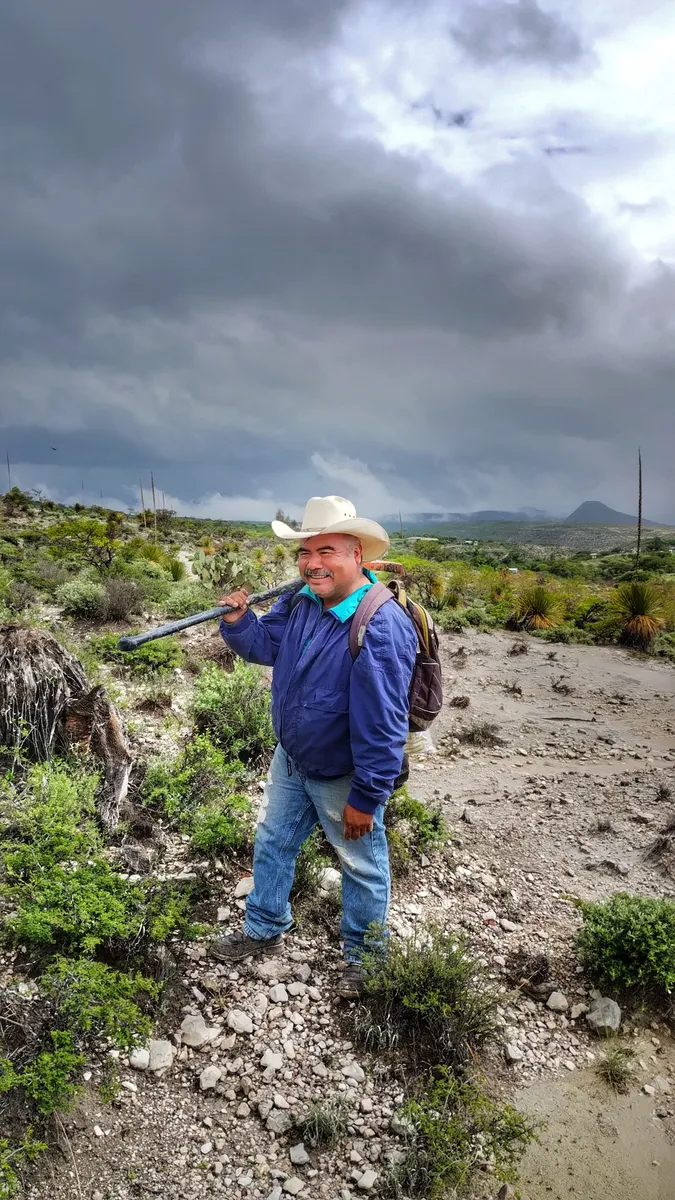
The landscape sets the terms
Some landscapes seem to speak quietly. In a semiarid region, a stony slope, a patch of vegetation and a seasonal streambed all hold valuable information. From a distance we might see land that seems to be missing trees. Up close, more interesting questions emerge. Which ecosystem belongs here? What remains of it? What is stopping it from recovering?
At Global Lemon we work with native species in Tepelmeme Villa de Morelos, Oaxaca. The place illustrates a central idea: restoration has to be designed for a particular site. A technique that works elsewhere needs evaluating before we load it into the truck. Good intentions cross borders easily. Ecological compatibility takes a little more paperwork.
Deciding what we want to bring back
Ecological restoration begins by identifying the native ecosystem we hope to recover. We can build that reference from remnants of vegetation, comparable sites, community knowledge and scientific evidence. This helps us avoid mistaking a naturally open landscape for a lost forest. Some places need their communities of shrubs and herbaceous plants back, rather than a cover of trees. [1]
Next we need to identify the causes of degradation. If grazing continues without an agreement on how to manage it, or the site is still losing soil, planting alone leaves the underlying problem in place. A project needs to identify where intervention is appropriate and where recovery is already under way and needs protection. Sometimes the first job is to stop interrupting it.
The soil deserves a closer look
Two places only a short distance apart can offer very different conditions for a root. In drylands, water and wind erosion can undermine recovery. Look for where soil is being lost and where ground cover remains. The FAO notes that protecting soil from further erosion is often a crucial first step in restoration. [2]
That means walking the site, observing it and carrying out tests where necessary. Site preparation should follow from what you find. An erosion-control structure that helps on one slope may be unnecessary or harmful on another. Moving more earth doesn’t show more commitment. A precise intervention often makes less noise.
The rainy season doesn’t sign contracts
In semiarid areas, it matters how much rain falls, how it is distributed and how much moisture the ground retains. A spectacular downpour can be followed by a long dry spell. Planting dates should reflect actual conditions on the ground and local experience as well as the date on the calendar. [2]
That takes advance coordination: making sure plants and crews are available, checking access and agreeing on what to do if the rains arrive late. Moving a planting day forward to coincide with a visit can have an ecological cost. Trees keep their own schedule and, as far as we know, still haven’t started checking their digital invitations.
Choosing native species by name and origin
“Native” is a useful starting point. To choose well, we also need to know where the planting stock comes from and whether it suits the site. The FAO emphasizes quality propagation material and well-adapted species in dryland restoration. Choosing a mix means identifying which ecological functions we hope to recover and where in the landscape they belong. [3]
In Global Lemon’s work in Tepelmeme, we plant mesquite, also recorded as Prosopis laevigata and currently accepted as Neltuma laevigata; Leucaena leucocephala; Vachellia farnesiana; Lysiloma acapulcense; and Eysenhardtia polystachya. Scientific names tell us which trees we are talking about, even when their common names change from one community to the next. [5]
This selection reflects our experience on this particular project. It should not be copied wholesale in another region. The origin of the plants, the local site assessment and the reference vegetation still guide where and how each species is used.
Local knowledge is part of the design
Communities know how the landscape has changed, how people use it, how to get around and which signs mark the changing seasons. A map alone is unlikely to tell us all that. Residents should help set objectives and reach agreements as well as participate in fieldwork. The FAO’s dryland guidelines call for interventions that respond to the needs of the people who take part and whose livelihoods depend on the land. [4]
Tepelmeme deserves restoration designed around its own conditions. Sharing that approach is a way to learn alongside other semiarid regions of the world. What travels well is a way of making careful decisions, informed by the site and grounded in shared responsibility. A landscape may seem silent. Learning to listen changes a project from the start.
Frequently asked questions
What does restoring a semiarid area involve?
It means recovering the reference ecosystem, taking account of soil, water availability, vegetation and the causes of degradation. Some sites are naturally open.
Can Tepelmeme’s species mix be used somewhere else?
We share the list as an example from our own work. Before using the same species elsewhere, assess the origin of the planting stock and its suitability for the new site.
About the author
Global Lemon Team. We share knowledge about forest conservation and restoration, drawing on field observations and the sources cited in this article.
Transparency statement
This article was prepared with the help of AI tools and reviewed by Global Lemon’s editorial team. Our account of Global Lemon’s work draws on information provided by Paúl Burgos. The references distinguish our field experience from research findings. This article is for information only. Decisions in the field require a site assessment.
References
- Society for Ecological Restoration. What is Ecological Restoration?
- FAO. Sustainable Forest Management Toolbox: Dryland forests and agrosilvopastoral systems, In more depth.
- FAO. Action Against Desertification: Large-scale restoration.
- FAO. Global guidelines for the restoration of degraded forests and landscapes in drylands: Building resilience and benefiting livelihoods (2015). Official publication record.
- Royal Botanic Gardens, Kew. Plants of the World Online: taxonomic records for the species mentioned. Paúl Burgos provided the list of species used in Tepelmeme. Neltuma laevigata; Leucaena leucocephala; Vachellia farnesiana; Lysiloma acapulcense; Eysenhardtia polystachya