When Newly Planted Trees Need Supplemental Water
An extra watering can give young trees a chance. Knowing when to do it takes a close look at field conditions.
By Global Lemon, Editorial team ·
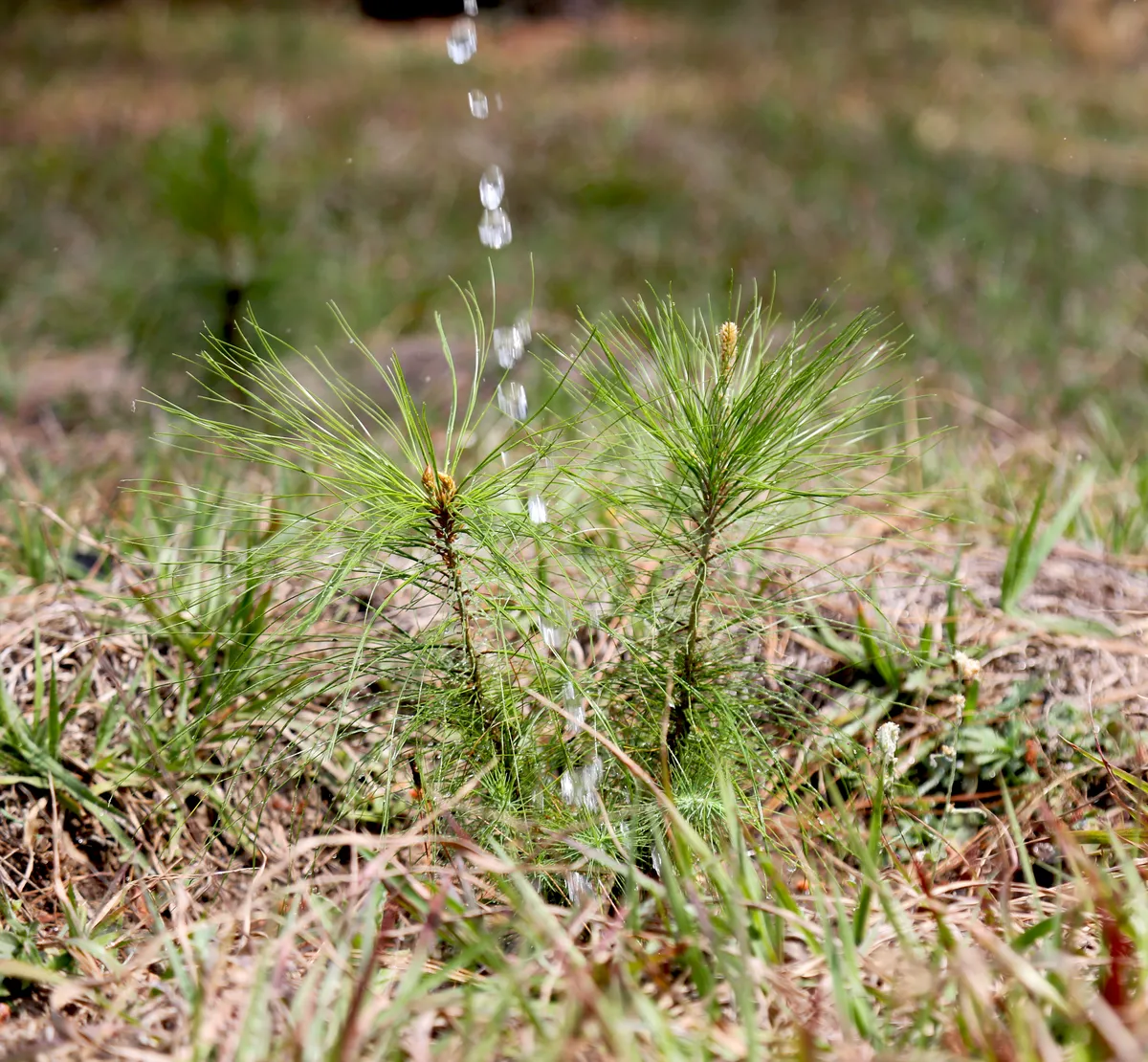
When the rain stops
The first rains soaked the ground, and planting got under way. Now the dry spell has lasted longer than anyone expected. The young tree is still there, its roots just beginning to explore their new surroundings. Should someone bring it water?
Supplemental watering helps young trees through periods when soil moisture is in short supply as they become established. It can make a difference, but someone has to decide which trees need it, what water to use and how long to keep it up. Getting a water truck to a hard-to-reach site takes time and money. A sound assessment in the field matters.
The surface tells only part of the story
Soil can look dry on top and still hold moisture below. The reverse can also happen. A light rain may wet the surface without reaching the roots. Check the soil around the root ball at the relevant depth, taking care to avoid damaging the tree. An experiment with Mediterranean woody plants linked seedling establishment during drought to the roots’ ability to reach moist soil layers. [1]
Leaves offer clues that take some interpreting. Wilting, discoloration and leaf loss can each have several causes. Some species shed foliage seasonally. Consider what you see alongside soil moisture, the species, how long ago the tree was planted and the weather. A single sign rarely settles the question.
When to step in
The need for water varies by site and species. Recent rainfall, temperature, wind, exposure, drainage and the soil’s capacity to hold water all play a part. The FAO discusses periodic watering while trees become established in arid regions and also points out the cost and the difficulty of reaching some sites. [2]
A study in central Chile found that responses to watering varied by species and seedling size. [3] A fixed schedule, such as applying the same amount every week, needs to be tested at the site. One soil may dry out between applications, while another may receive more water than it needs. The amount and interval are technical decisions that can be adjusted to suit the observed moisture, the species and the weather.
Water slowly, then check the soil
The aim is to moisten the soil the roots can reach, at a rate the ground can absorb. When water runs downhill, part of the effort goes with it. Regulate the flow and check that water is soaking in. A puddle that lingers tells you little about how much water reached the roots.
Localized irrigation systems can deliver water slowly to a specific part of the root zone. They require maintenance and can clog. [4] The same principle applies when watering by hand. Choose where to pour and check how the water spreads. Working during cooler hours can help reduce losses. The flow rate, the amount of water and the point of application still need attention.
In Mexico, CONAFOR’s Manual de restauración forestal y reconversión productiva also discusses supplemental watering after planting, preferably early in the morning or near sunset. It describes several ways of watering, depending on access to a water supply. [6] These management guidelines need to be adapted to each site. They do not prescribe a fixed number of liters or days between applications.
What’s in the water truck?
The available water must be suitable for both the species and the soil. Salinity and certain constituents, including sodium, can affect water availability, infiltration and plant health. The FAO recommends assessing water quality in light of the conditions in which it will be used. [5] Clear water can still present problems. Check its source if there is any uncertainty.
Planning for supplemental watering
Before committing to a watering schedule, check the water supply, access and budget, and agree on who will do the work. Consider the needs of the community and the ecosystem. Recording the date, the area watered, the amount applied and the condition of the soil helps teams adjust their decisions. If ongoing watering becomes routine, revisit the choice of site, species and planting season.
At Global Lemon, we want to be able to explain why we choose to water. The aim is to help trees establish while using water responsibly. A well-timed application can make all the difference. An empty tank tells us the water was delivered. What happened in the soil around the roots tells us whether it helped.
Frequently asked questions
How often should newly planted trees receive supplemental water?
There is no single interval that works for every planting. Soil moisture in the root zone, local weather, soil type and species guide the decision.
Does dry topsoil mean the tree needs water?
The surface can dry out before the layers where the roots are growing. Check moisture at the relevant depth, taking care to protect the root ball.
About the author
Global Lemon team. We share knowledge about forest conservation and restoration, drawing on field observations and the sources identified in the article.
Transparency statement
This article was prepared with support from AI tools and reviewed by Global Lemon’s editorial team. Field observations identified as our own come from information provided by Paúl Burgos. The references distinguish those experiences from research findings. This article is informational. Field decisions require a site assessment.
References
- Padilla, F. M. and Pugnaire, F. I. (2007). Rooting depth and soil moisture control Mediterranean woody seedling survival during drought. Functional Ecology 21:489–495.
- FAO. Arid zone forestry: A guide for field technicians. Maintenance of the plantation.
- Becerra, P. I., Cruz, G., Ríos, S. and Castelli, G. (2013). Importancia del riego y tamaño de las plantas en el éxito de establecimiento de diferentes especies nativas en un ecosistema degradado de Chile central. Bosque 34(1):103–111.
- FAO. Arid zone forestry: A guide for field technicians. Chapter VII: Irrigated forest plantations.
- Ayers, R. S. and Westcot, D. W. FAO. Water quality for agriculture: Water quality evaluation.
- CONAFOR (2015). Manual de restauración forestal y reconversión productiva. Section 2.8, “Riego de auxilio,” pp. 77–78.