Rosita Ascencio and Purépecha Herbal Knowledge
Meet Rosita Ascencio, learn how she came to practice traditional Purépecha medicine and explore what her legacy can teach us about plants, memory and conservation.
By Global Lemon, Editorial team ·
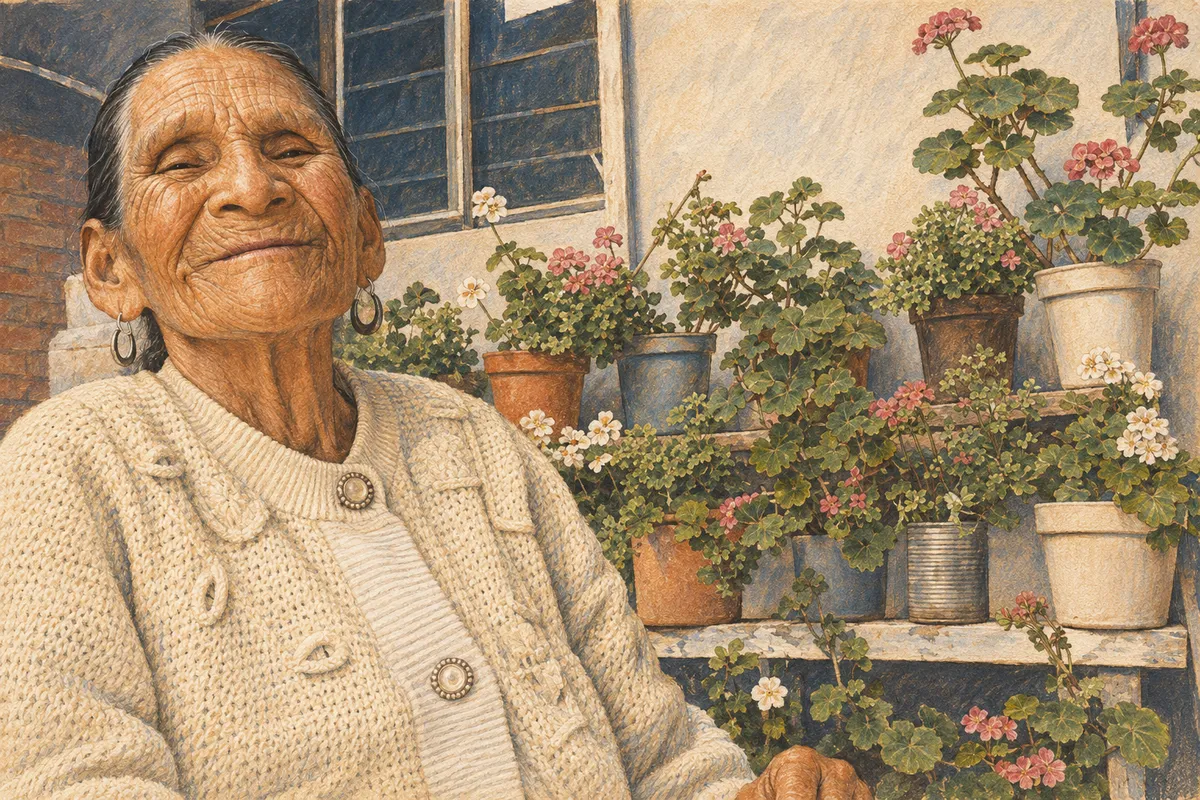
The life of a traditional healer from Puácuaro invites us to look more closely at plants, memory and forests.
A name, a place and a life
A notebook takes up little room. What it holds can stay with a family for generations. Notebooks have a special place in the story of Doña Rosita Ascencio. They record how she cared for people and preserve traces of those who came to see her.
Her full name was Rosa Ascencio García. She was a Purépecha traditional healer in Puácuaro, on the shores of Lake Pátzcuaro in Michoacán. She died in 2022. UNAM’s University Program for the Study of Cultural Diversity and Interculturality documented her career and her work with the Organización de Médicos Indígenas Purépechas, an organization of Purépecha Indigenous healers. [1] Understanding her work begins with knowing who she was and where she lived.
Learning alongside someone
The earliest account of Rosita’s training begins with an aunt. In an interview published by Gaceta UNAM, physician and anthropologist Roberto Campos Navarro described how this knowledge passed between women and continued to grow over time. [2] Her training was part of that tradition of learning within the family and through practice.
Some things can only be learned up close. You watch how someone tells things apart, asks a question or recalls a detail. You return to an explanation until it makes sense. Recognizing this kind of learning lets us value knowledge that rarely appears in school records. It also invites us to listen to each person without assuming that every family or community knows precisely the same things.
Notebooks and a voice in public life
Campos Navarro brought together Rosita’s life story and her records in Doña Rosita Ascencio. Curandera purépecha, published in 2016 by UNAM’s Faculty of Medicine and Artes de México and reprinted in 2026. The publisher singles out the notebooks in which she recorded consultations and their value as a firsthand account of Indigenous medicine. [3] Documenting a practice makes it possible to study it and to preserve the voices of the people who carry it on.
Rosita also served as secretary-general of the Organización de Médicos Indígenas Purépechas. She took part in conferences, workshops and seminars, and represented Mexico at international meetings, including one in Winnipeg, Canada. [1] Bringing people together and making herself heard beyond her own community were also part of her contribution.
Plants in the life of a community
Mexico’s National Institute of Indigenous Peoples (INPI) describes health in a Purépecha context as linked to harmony with nature and to family and community norms. [4] That perspective helps explain how much is lost when herbal medicine is reduced to a list of plants.
María Teresa Sepúlveda y Herrera studied the pre-Hispanic roots of this medicine in a book published by UNAM. Tracing its origins leaves room to recognize how practices change over time. [7]
Researchers continue to study this knowledge. Through interviews with residents of the Purépecha Plateau, a study published in Acta Botanica Mexicana documented 97 plant species used for skin conditions. [5] The authors called for further research on safety and effectiveness. Their inventory records uses and knowledge and opens questions for future study.
What Rosita’s story asks of us in restoration
At Global Lemon, we are proud to work on the Purépecha Plateau. Puácuaro is part of the lakeshore region around Lake Pátzcuaro. Naming each place helps us respect the diversity of Purépecha territory. For those of us working in restoration, Rosita’s story raises questions about the links between conservation and cultural continuity.
Caring for forests can help preserve places where plants grow and people pass on knowledge. That connection needs to be understood locally. A plant grown in a garden and a species in the forest understory need different conditions. When planning restoration, it helps to ask which species are present, what changes the community has observed and what vegetation it makes sense to restore.
Listening also means asking permission
The choice to share knowledge belongs to the people who hold it. The Tkarihwaié:ri Code of Ethical Conduct, adopted under the Convention on Biological Diversity, calls for respect for consent, confidentiality and community participation in matters involving their knowledge and biodiversity. [6]
Before documenting a plant or a story, agree on what may be shared, how its custodians should be credited and what should remain private. Remembering Rosita with care starts here. We can honor what has been documented and make room for the people who continue to learn, teach and decide the future of their own territory.
About the author
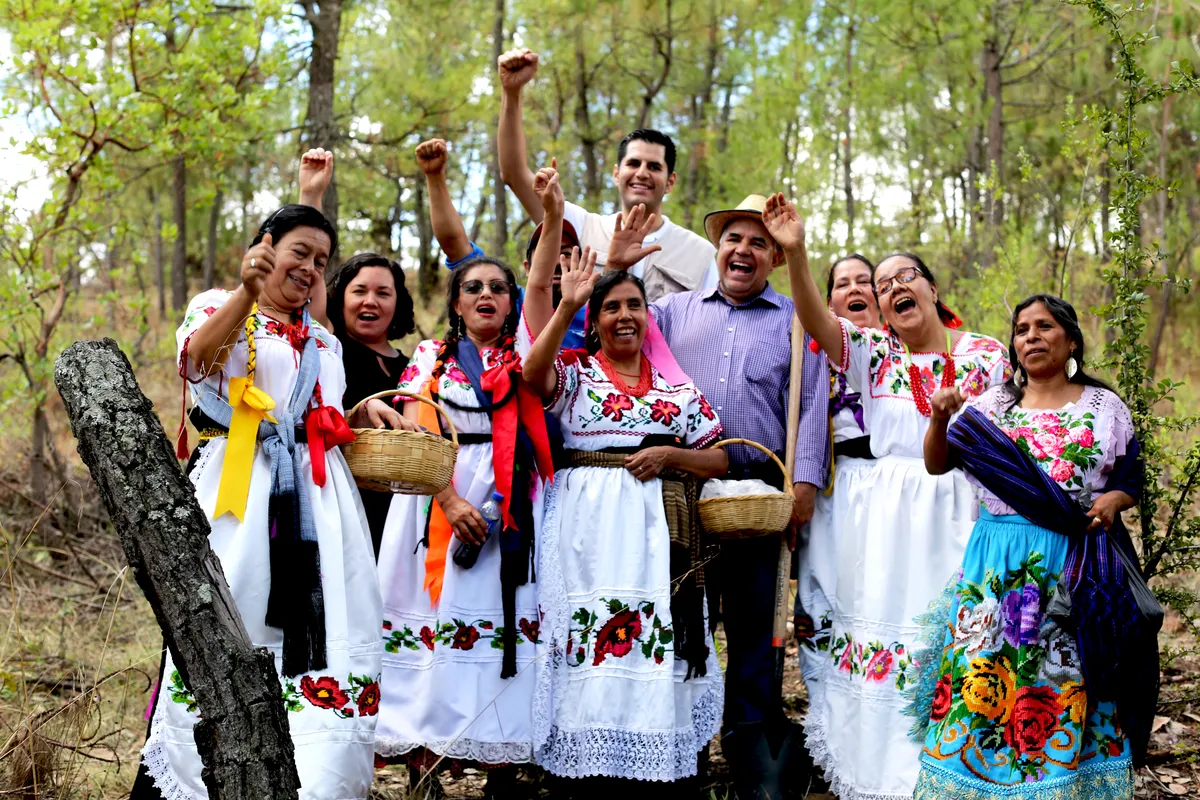
Global Lemon works with communities to conserve and restore forests. This article draws on that field experience and on the sources listed below.
Transparency statement
This profile draws on public documentation from UNAM and the research cited below. Preserving and using community knowledge requires listening to and acknowledging the people who sustain it.
References
- UNAM, Programa Universitario de Estudios de la Diversidad Cultural y la Interculturalidad (June 6, 2022). Obituario: Rosita Ascencio García.
- Guzmán Aguilar, Fernando (July 16, 2020). Medicina tradicional-casera, herencia matriarcal. Gaceta UNAM. Interview with Roberto Campos Navarro.
- Facultad de Medicina, UNAM (May 22, 2026). Doña Rosita Ascencio. Curandera purépecha. Publisher’s entry for Roberto Campos Navarro’s book. UNAM and Artes de México, first published in 2016 and first reprinted in 2026.
- Instituto Nacional de los Pueblos Indígenas. Atlas de los Pueblos Indígenas de México: P’urhépechas, etnografía. See the section “Medicina tradicional.”
- Esquivel-García, R., Pérez-Calix, E., Ochoa-Zarzosa, A., and García-Pérez, M. E. (2018). Flora etnomedicinal utilizada para el tratamiento de afecciones dermatológicas en la Meseta Purépecha, Michoacán, México. Acta Botanica Mexicana 125:95–132. DOI 10.21829/abm125.2018.1339.
- Convention on Biological Diversity (2010). Decision X/42, Tkarihwaié:ri Code of Ethical Conduct to Ensure Respect for the Cultural and Intellectual Heritage of Indigenous and Local Communities.
- Sepúlveda y Herrera, María Teresa (1988). La medicina entre los Purépecha prehispánicos. UNAM, Instituto de Investigaciones Antropológicas, 186 pp. Entry in UNAM’s historical book catalog. ISBN 9688374199.