Corporate Environmental Responsibility: A Guide for Businesses in Mexico
Explore Mexican environmental laws, certifications and examples of corporate social responsibility. Learn how to check company credentials and refine your strategy.
By Global Lemon Team ·
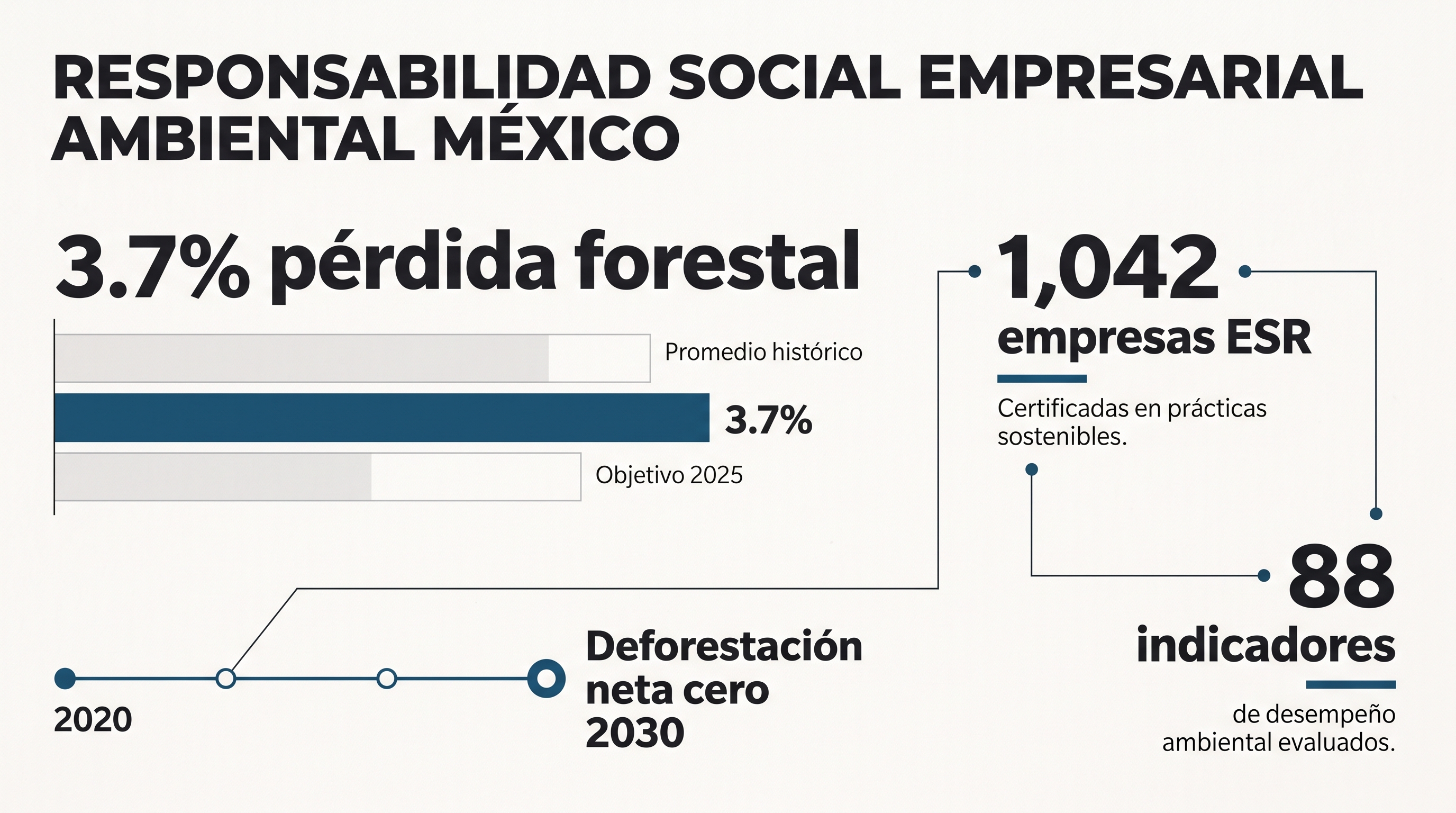
In brief In Mexico, environmental corporate social responsibility means making environmental protection, legal compliance, responsible relationships with communities, and transparent measurement of results part of business decisions. It goes beyond donating trees or announcing targets. Companies need to reduce their impacts, prevent harm, report progress, and work with restoration projects whose results can be checked. As Mexico works toward zero net deforestation by 2030, businesses can turn their environmental commitments into tangible benefits for ecosystems and people.
Key takeaways
- Start with the law. Mexico’s General Law of Ecological Balance and Environmental Protection (LGEEPA), its General Law on Climate Change, and the applicable Mexican Official Standards (NOMs) set the mandatory baseline. Certification is voluntary [1].
- Why action matters. Mexico lost 3.7% of its forest area and has committed to zero net deforestation by 2030 and a maximum of 644 million metric tons of gross CO₂-equivalent emissions [3].
- The Distintivo ESR® recognizes management practices. In 2025, 1,042 large companies received it under an assessment covering 88 indicators [2].
- Ask four questions. What was the baseline? Which methods were used? How much land was restored? How many trees survived after 12 months?
- Watch for greenwashing. Publishing only the number of trees planted leaves out the monitoring.
How environmental CSR turns a commitment into results
Mexico lost 3.7% of its forest area, according to the Bank of Mexico’s Financial Stability Report, which includes figures through April 2026. That helps explain why more people want to know what environmental responsibility means, which companies practice it, and how to tell a credible initiative from a publicity campaign.
An environmentally responsible company prevents, reduces, and offsets impacts, backs its claims with evidence, and involves employees, communities, and suppliers in the process.
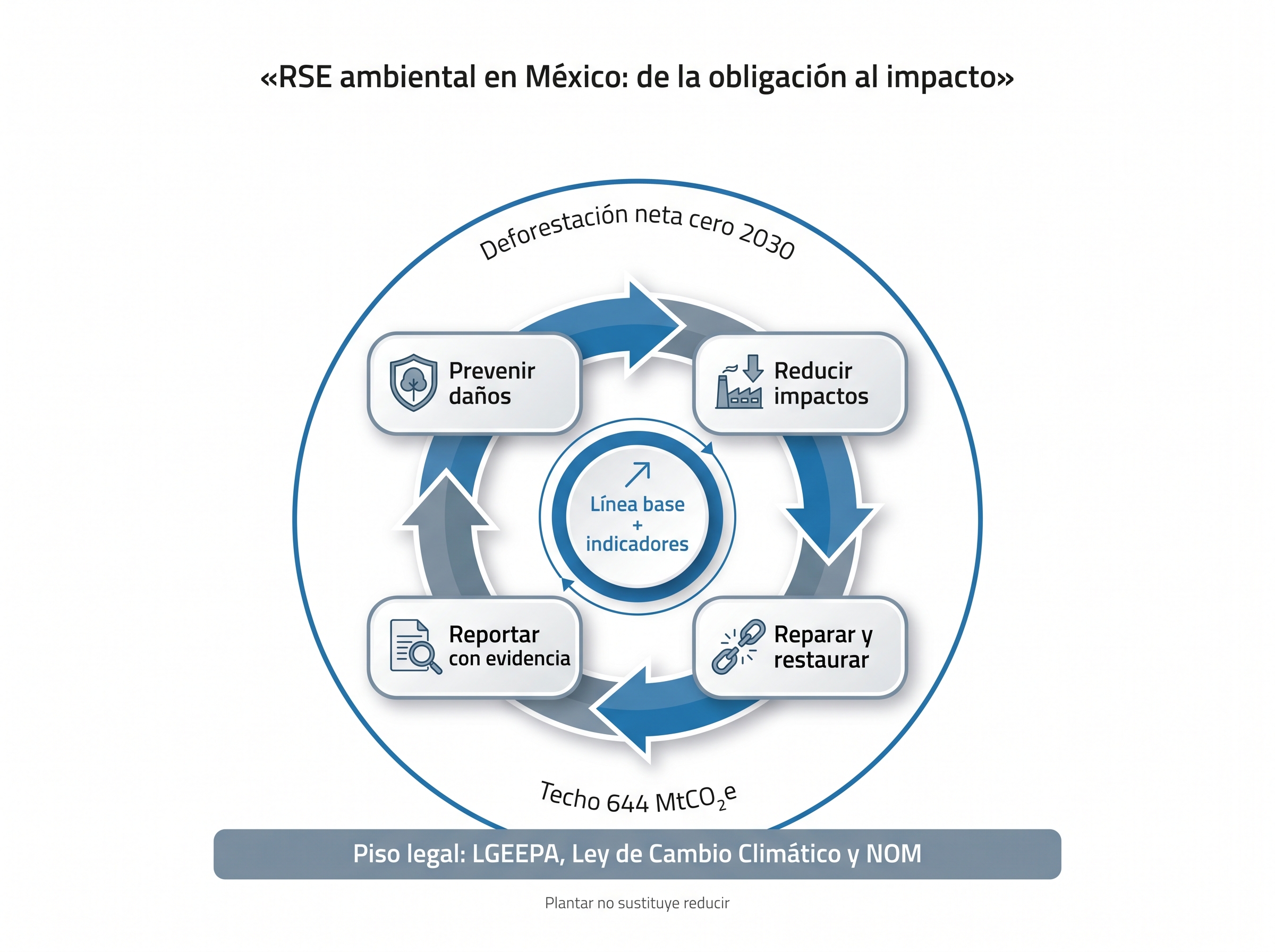
This guide explains what environmental CSR means in Mexico. It covers the framework for zero net deforestation by 2030 [4] and the emissions ceiling under Mexico’s third nationally determined contribution (NDC 3.0) [3], the relevant laws and certifications, a practical way to assess a company, and five measurable steps for implementing a strategy.
What sustainability professionals in Mexico are saying
People working in the field want data they can act on. According to KPMG Mexico’s 2025 Outlook for Senior Management in Mexico, cited by EMMI, 71% of senior executives identify lack of access to clean and renewable energy as a risk to business continuity [10]. Environmental issues now affect day-to-day operations as well as a company’s reputation.
“Corporate social responsibility in Mexico has been seen as a cosmetic addition: donation campaigns, occasional volunteering, or photos with the communities receiving support.” — Ignacio Pérez Mondragón, on LinkedIn.
“Sustainability begins with people, before it begins with processes.” — Earthgonomic México, A.C., on LinkedIn.
“We spoke with representatives of several companies about their experiences building a culture of social responsibility and the benefits of earning the #DistintivoESR®.” — Centro Mexicano para la Filantropía, A.C., on ELESR 2026, via LinkedIn.
Without measurements, it is hard to defend a claim during an audit, in front of a demanding client, or under public scrutiny.
What environmental CSR means and how to measure it
Environmental corporate social responsibility is a voluntary, strategic approach to identifying, preventing, reducing, remedying, and reporting a company’s impacts on the environment and local communities. Legal compliance is the starting point.
Four parts of a responsible environmental strategy
- Compliance and prevention. Permits, official standards, waste, emissions, water, and land use.
- Managing impacts. Inventories covering emissions, energy, waste, the supply chain, and biodiversity.
- Community relations. Consultation, local employment, environmental education, restoration, and shared benefits.
- Transparency. Targets tied to a baseline, indicators, methods, progress, limitations, and verifiable results.
Indicators that give environmental CSR substance
Ask for indicators like these, or use them in your own program.
- Metric tons of CO₂-equivalent emissions measured and reduced.
- Hectares restored, alongside the number of trees planted.
- Tree survival and follow-up monitoring.
- Native species used.
- Participating families or communities and the benefits they receive.
- Water, energy, and materials consumed per unit produced.
- Percentage of suppliers assessed against environmental criteria.
A study published in SciELO developed and validated a scale for measuring CSR at wind energy companies on the Isthmus of Tehuantepec, Oaxaca. It covered environmental protection, community support, and ethical and legal compliance [6]. Research on corporate governance in Mexican companies suggests that independent boards and audit committees are associated with better management of environmental, social, and governance (ESG) issues [7]. Measurements help establish whether a company is reducing harm or simply communicating its intentions.
Three often-confused stages of environmental responsibility
| Approach | Strengths | Limitations |
|---|---|---|
| CSR for publicity | Campaigns, donations, and planting photos can attract attention quickly. | Without measurable reductions, a statement of intent holds little weight with an auditor or a demanding client. |
| Legal compliance | Meets minimum requirements for permits, official standards, waste, emissions, and land use. | Complying with the law avoids penalties. It does not establish the impact of a voluntary strategy. |
| Verifiable CSR | Combines legal compliance with a baseline, targets, 12-month survival rates, and comparable results. | Requires funding, accountable staff, supply chain data, and monitoring on the ground. |
Why deforestation and climate change make environmental CSR urgent
Mexico needs to reduce emissions, conserve ecosystems, and halt net forest cover loss by 2030 [4]. Corporate reforestation should complement emissions reductions and deforestation prevention. It cannot replace either.
Indicators to guide business priorities
| Indicator | Figure | Relevance for companies |
|---|---|---|
| Total forest area | -3.7% | Conservation and restoration are part of risk management. |
| Deforestation associated with conversion to grassland | From 120,660 to 82,045 ha (−32.0%) | Examine changes by land use as well as the aggregate figure. |
| Deforestation associated with conversion to cropland | From 5,387 to 26,914 ha (+399.6%) | Agrifood supply chains and responsible sourcing are priorities. |
| National target | Zero net deforestation by 2030 | Align restoration, sourcing, and reporting with this goal [4]. |
| NDC 3.0 climate target | A maximum of 644 MtCO₂e in gross emissions in 2030 | Prioritize emissions reductions, efficiency, and the energy transition [3]. |
The first three figures come from the Bank of Mexico’s Financial Stability Report, with data through April 2026. NDC 3.0 also includes a 51% reduction in black carbon emissions by 2030 [4].
| Land use | Change in deforestation (%) |
|---|---|
| Grassland | -32 |
| Cropland | 399.6 |
What national trends mean for business decisions
Agrifood companies should examine raw material traceability, agroforestry, and measures to prevent land conversion. The nearly 400% increase in forest loss associated with conversion to cropland has direct implications for their supply chains. In manufacturing and services, energy efficiency, waste, water, and sustainable procurement generally take priority.
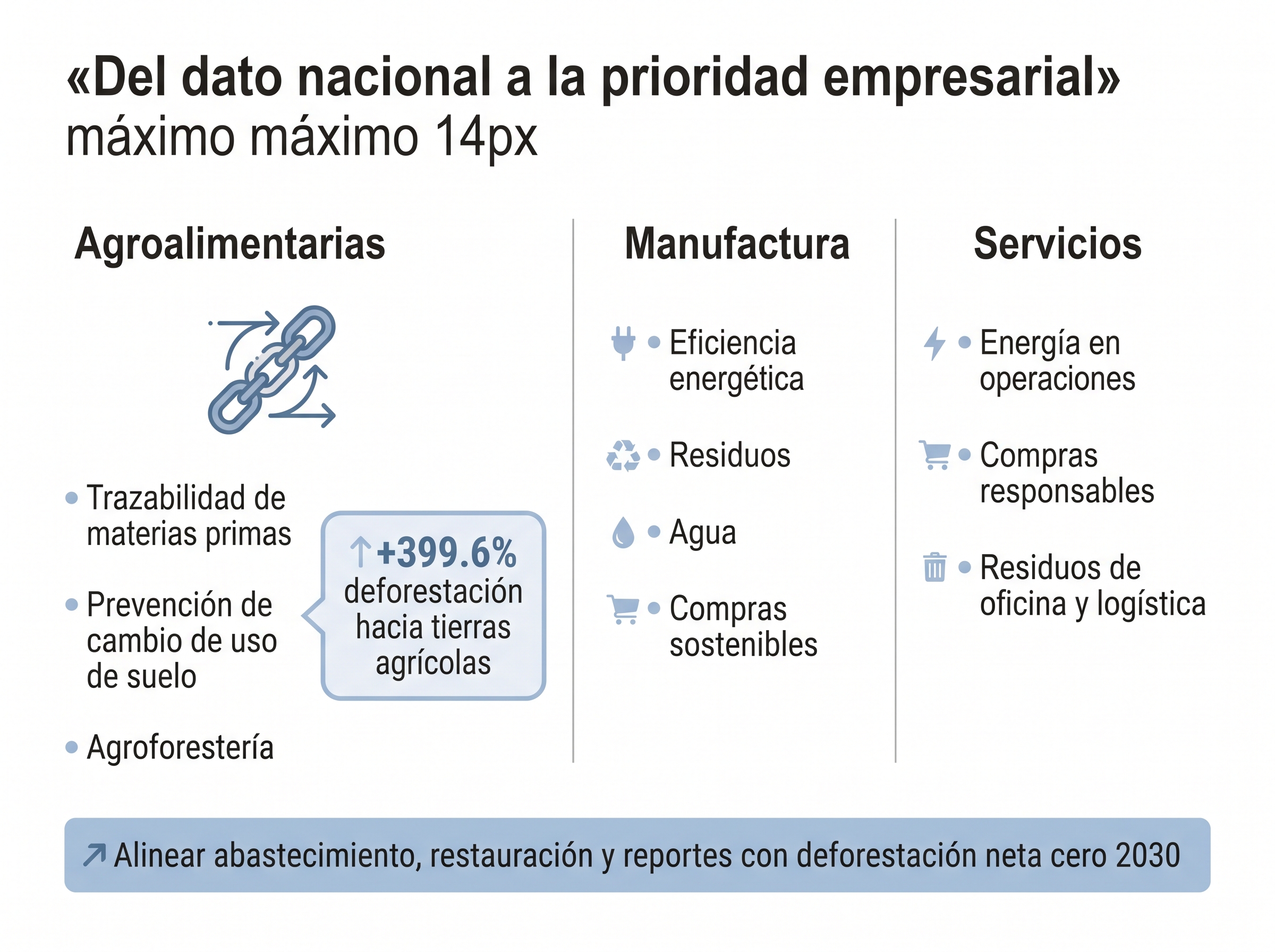
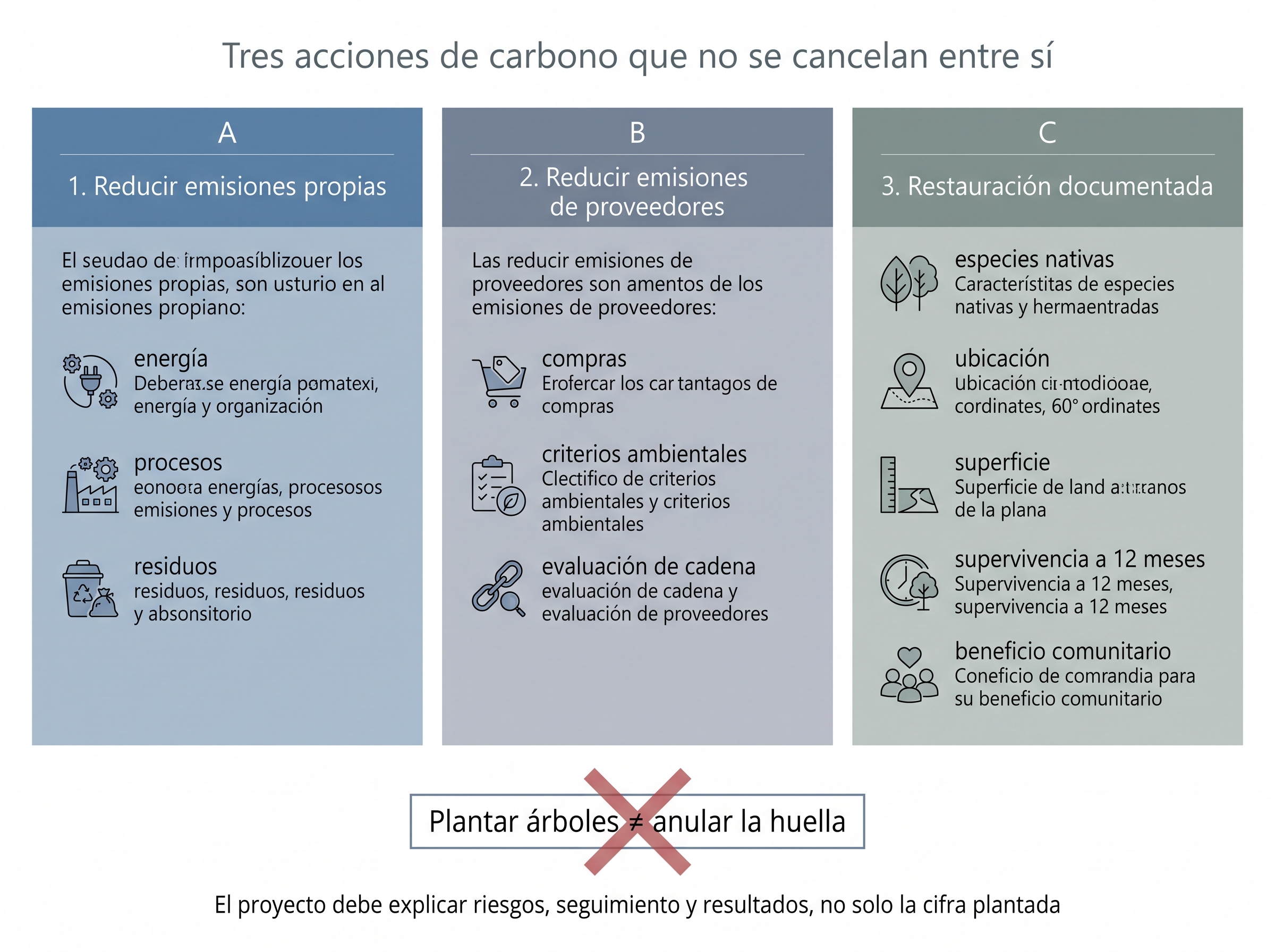
Companies with carbon targets should distinguish between cutting their own emissions, reducing suppliers’ emissions, and supporting restoration with documented results. Planting trees does not automatically offset a carbon footprint. The project should identify the species, location, monitoring arrangements, risks, and community benefits.
Laws, certifications, and reports that shape environmental CSR in Mexico
Environmental CSR starts with legal obligations and develops through voluntary certifications, sustainability reports, and community programs. Every recognition scheme operates alongside the law.
Basic regulatory framework
| Law, standard, or institution | What it covers | What a company should do |
|---|---|---|
| LGEEPA | The framework for environmental protection, preservation, restoration, and sustainable use. It includes the management of protected natural areas with agrarian communities and Indigenous and Afro-Mexican peoples [1]. | Identify obligations based on the company’s activities, location, and impacts. |
| General Law on Climate Change | Climate policy, mitigation, and adaptation [9]. | Assess climate risks and set emissions reduction and resilience goals. |
| Mexican Official Standards (NOMs) for the environment | Technical requirements by activity, covering emissions, waste, discharges, or noise. | Check which NOMs apply to facilities, processes, and suppliers. |
| SEMARNAT (Ministry of Environment and Natural Resources) | Federal environmental policy. | Check applicable permits, sector-specific criteria, and programs. |
| PROFEPA (Federal Attorney for Environmental Protection) | Inspections, oversight, and voluntary certification. | Assess whether the Clean Industry program (Industria Limpia) applies to the company’s activities. |
| Sustainability Reporting Standards (NIS) | Sustainability disclosures from 2025 under the applicable framework [9]. | Consult accounting, legal, and sustainability specialists. |
Moving from compliance to demonstrated results
- Review legal and operating conditions. Check permits, NOMs, resource consumption, waste, and emissions.
- Close compliance gaps. Address violations before publicizing progress.
- Consider voluntary certification. Options include PROFEPA’s Clean Industry program and industry-specific schemes.
- Manage CSR. Use the Distintivo ESR® criteria to guide policies, evidence gathering, and indicators.
- Report transparently. Explain methods, targets, progress, challenges, and results.
In the State of Mexico, companies that hold current PROFEPA environmental certification can apply for recognition by the state environmental authority [5].
What the 2025 ESR® figures show and how to check a company’s claims
In 2025, the Mexican Center for Philanthropy (Cemefi) awarded the Distintivo ESR® to 1,042 large companies. Of those, 401 were based in Mexico City, about 38.5% of the total. Cemefi says the award can strengthen customer confidence and loyalty by showing that a company cares about its social and environmental impact as well as its profits [2].
The award alone does not establish a specific reduction in impact. The assessment for large companies uses 88 indicators across five stages of development. It evaluates management practices across the business and takes more than checking a few boxes.
Four questions for assessing environmental claims
| Company claim | Question to ask |
|---|---|
| Current Distintivo ESR® award | Which specific environmental practices and records support it? |
| Sustainability report | Does it give a baseline, methods, targets, and results that can be compared from year to year? |
| Corporate reforestation | Does it identify species, site, survival rates, maintenance, and community involvement? |
| Environmental certification | Does it cover one facility, a product, a process, or the entire organization? |
If a company reports only the number of trees planted, ask for the area restored and the 12-month survival rate. Without those figures, monitoring is usually missing.
In the building materials sector, GCC has reported holding the Distintivo ESR® for 20 consecutive years. That record suggests sustained management effort. It does not necessarily establish measured operating performance.
Five measurable steps for implementing environmental CSR
- Establish a baseline. Measure energy use, water, waste, emissions, materials, and location-specific risks. SAP Concur recommends starting with an assessment of impacts and expectations, working with operations, finance, purchasing, and senior management to map current impacts [8].
- Choose two or three material priorities such as emissions, water, waste, restoration, or sourcing. Keep the list manageable.
- Set verifiable targets. Specify a base year, indicator, annual target, responsible person, budget, and audit.
- Build partnerships for local impact with organizations and communities that document species, area, maintenance, local benefits, and monitoring. Global Lemon’s PLANTING experiences give corporate teams a way to take part in restoration. Participation contributes transparently to a project. It does not confer certification or automatically offset emissions.
- Report honestly on results, methods, lessons, limitations, and unfinished work. Public communications cannot make up for reductions that never took place in operations.
Frequently asked questions about corporate social and environmental responsibility
What is corporate social and environmental responsibility?
It means managing the impacts an organization has on the environment, people, and communities. It includes complying with the law, preventing pollution, cutting emissions and waste, using resources efficiently, respecting workers’ rights, and reporting evidence of results.
What is environmental social responsibility?
It is the part of CSR concerned with protecting ecosystems and reducing environmental harm. It covers energy efficiency, water and waste management, sustainable procurement, biodiversity, restoration, and environmental education. Each needs indicators, targets, and evidence.
Which companies are socially and environmentally responsible?
Look for companies that can show what they do, how they do it, and what they achieve. Check for documented compliance, targets with a base year, reports explaining methods, relevant certifications, indicators of reductions, and community projects with follow-up.
How can I check whether a Mexican company is environmentally responsible?
Review primary sources: the sustainability report, emissions, water, and waste targets, Cemefi’s ESR® registry, and PROFEPA’s Clean Industry program. Compare commitments with results for at least two years. Comparable figures are essential to checking the claims.
What are ten socially responsible companies in Mexico?
There is no universal top ten. The criteria vary by industry, company size, and impact. A useful list names the source, year, type of recognition, and actions that can be verified. Give priority to comparable data, dated targets, and evidence from communities.
Which companies help the environment in Mexico?
Look for companies that reduce their operating impacts and support solutions they can document: emissions reductions, water efficiency, waste prevention, biodiversity, restoration, and community projects. Examine the location, methods, indicators, maintenance, and results behind the launch photos.
Limits of certification and when to seek specialist advice
A Distintivo ESR® award, certification, or tree-planting campaign cannot substitute for permits, NOMs, or reductions in operating impacts. Small and medium-sized businesses can begin with a table of impacts, compliance requirements, and quarterly targets.
For regulated emissions, hazardous waste, land-use changes, financial disclosures, or carbon projects, consult environmental, legal, accounting, and sustainability specialists. This article provides general information and is not legal, tax, or regulatory compliance advice. Restoration organizations should report the location, communities, species, maintenance, monitoring, and results of their projects.
How action, evidence, and collaboration build credibility
In Mexico, environmental CSR begins with compliance and prevention. It responds to climate change and deforestation, and gains strength from indicators, reporting, and partnerships on the ground.
Three things you can do this week: ask your operations team for its energy, water, and waste baseline, check which NOMs apply to your sites and suppliers, and ask your reforestation partners how much land they restored and what proportion of their trees survived after 12 months.
Responsible companies go beyond planting trees. They reduce their own impacts, work with communities, and show their results. A well-designed partnership can turn business resources into restoration that communities can see, measure, and share.
If your company would like to put its environmental goals into practice through a restoration partnership with visible results, request a partnership proposal.
About the author
Global Lemon works on reforestation, ecosystem restoration, and agroforestry with local communities and corporate partners in Mexico. Its team documents native species, area treated, maintenance, and tree survival. It helps companies design restoration programs with verifiable indicators. This article draws on current legislation, institutional reports, and peer-reviewed academic literature.
Transparency statement
This article cites official and academic sources, institutional reports, corporate publications, and public discussions on LinkedIn. Certifications, awards, and reforestation activities should be assessed alongside performance, methods, and follow-up. They do not establish overall impact on their own. As a restoration organization, Global Lemon has an interest in promoting partnerships of this kind.
References
[2] 2025 results for micro, small, and medium-sized businesses | Distintivo ESR® – Cemefi
[4] Ministry of Environment and Natural Resources, Federal Official Gazette
[5] Government of the State of Mexico, environmental certification program
[8] How to integrate corporate social responsibility into your business strategy | SAP Concur Mexico
[10] Corporate social responsibility for sustainability, EMMI