Getting Forest Seedlings Safely to the Planting Site
The forest we imagine also depends on how we load the truck.
By Global Lemon, Editorial team ·
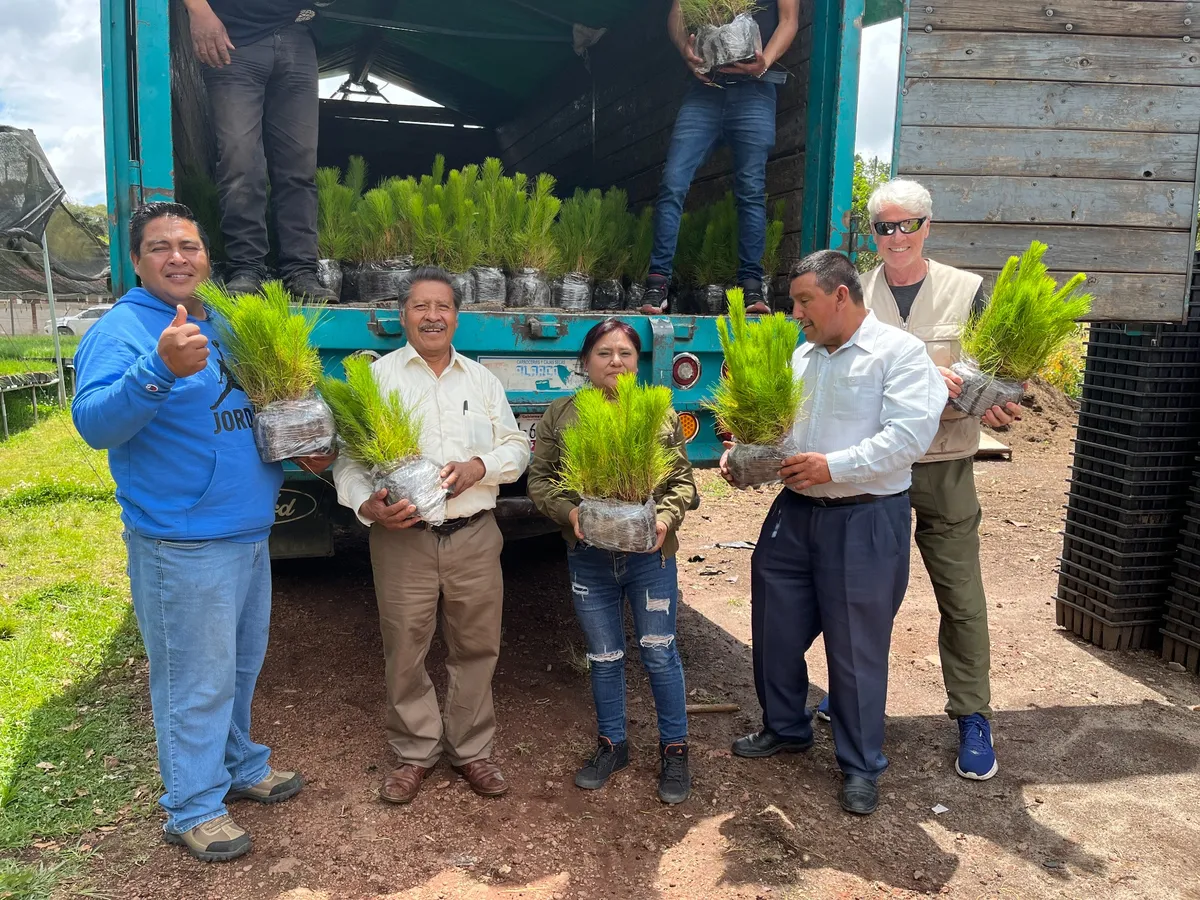
The journey counts, too
A young tree can spend months under careful nursery care and suffer damage on a single poorly planned trip. A wait in the sun, a load that crushes the shoots or a few hard jolts can be enough. We are carrying living plants with roots and tissues to protect and moisture to conserve. They deserve a better spot than the backpack that ends up under everyone’s luggage.
Plan the trip before starting the engine
Transporting forest seedlings begins with a conversation. Which batch is going out? In what containers? Who will receive it, and when will the site be ready? Coordinating the nursery, driver and planting crew cuts needless waiting.
Before loading, check the seedlings’ condition, make sure the containers are stable and check the moisture in the root ball, the mass of roots and growing medium that holds together around them. Follow the grower’s guidance on watering for that stock and production system. Assess any seedlings that already show damage before sending them out. A road trip is unlikely to solve the problem. [1]
Keep the sun off without creating an oven
During loading, waiting and travel, limit prolonged exposure to sun, heat and wind, including the blast of air that hits an open truck bed in motion. Scheduling trips for cooler hours and providing suitable protection can reduce stress. [2]
Arrange the cover so it protects the plants and lets air circulate. An enclosed space that traps heat can harm them, too. If seedlings must wait after arrival, keep them in the shade with ventilation and monitor their moisture. [3]
Hardening off at the nursery is a different process. It is a planned, controlled transition that prepares seedlings for outdoor conditions. Leaving them exposed for hours while the truck arrives is a delay that needs fixing. [3]
Handling bundles wrapped in plastic film
For some trips, we take seedlings out of their trays and bundle the root balls together in plastic cling film, commonly called vitafilm in Mexico. We group 10, 15 or 20 seedlings depending on their size and the batch. Those are examples from our own work. Bundling takes up less space than moving each tree in its own nursery bag with all its growing medium.
The wrapping should hold the root ball together without crushing stems or letting the growing medium fall apart. Poorly placed film can leave roots exposed. Protect the bundles from sun and heat as well. We have no evidence that the film acts like a magnifying glass. The practical risks to manage are overheating and water loss. Seedling-handling manuals recommend minimizing exposure and maintaining suitable conditions during packing and transport. [1],[6]
Stock grown in nursery bags has a different kind of physical protection, but it can still overheat, dry out or suffer impact damage. Each form of packaging calls for its own handling precautions.
Let the racks carry the weight
Making good use of space takes planning. Shelves and supports let crews arrange containers so the tier above does not rest on stems, shoots or foliage. Allow enough clearance for the actual size of the seedlings and keep the load stable. [1]
CONAFOR recommends avoiding overloads, keeping trays, containers and crates from being stacked directly on one another, and placing nothing on top of the seedlings. It also advises avoiding sudden movements. [2]
How many tiers will fit depends on the vehicle, the supports, the packaging and the batch. Even a short seedling should never have to double as a support post.
Different pines travel differently
Among the batches we transport, some lots of Pinus devoniana and Pinus montezumae have a relatively compact form. Some lots of Pinus pseudostrobus and Pinus leiophylla are more elongated, making them more vulnerable to bending, snagging or breakage during handling. We assess each batch in light of its age, origin, container and growth form.
Research offers some context. One trial found greater shoot elongation and height in P. pseudostrobus and P. leiophylla than in P. devoniana. Another study describes the grass stage of P. montezumae, an early phase in which the seedling gains little height. [4],[5]
Those studies describe growth. They do not establish stacking limits. Recognizing the differences helps crews adjust spacing, supports and handling. A species name is never a reason to let seedlings bear the weight of another tier.
Take the same care when unloading
When unloading, grasp the container, take hold of the edges of the tray or support a bundle from underneath. Never lift a seedling by the stem. A blow can break apart the root ball and injure the roots. [2] We sometimes remind the team that bundles are not bricks. Pass them carefully from one person to the next, supporting each bundle and communicating as you go. Never toss them across a gap or drop them off the truck. We supervise unloading so we can correct rough handling and check for overturned containers, breakage or lost growing medium.
If planting has to wait, the person receiving the batch keeps it protected and consults the nursery about its care. Scheduling dispatch close to planting time is preferable to leaving trees unattended at the site. [3]
Taking care on the journey is part of taking care of the restoration project. Good logistics rarely get applause, but you can see the result when the seedlings arrive in good condition.
Frequently asked questions
How many bundles or tiers can be stacked?
That depends on the vehicle, the supports and the batch. The structure must carry the weight, with enough clearance to protect stems, shoots and foliage from being crushed.
Can bundles be tossed while unloading?
No. Pass them carefully, supporting them from underneath. An impact can break the root ball apart or damage the seedlings even when the wrapping looks intact.
About the author
Global Lemon team. We share knowledge about forest conservation and restoration, drawing on field observations and the sources identified in the article.
Transparency statement
This article was prepared with support from AI tools and reviewed by Global Lemon’s editorial team. Field observations identified as our own come from information provided by Paúl Burgos. The references distinguish those experiences from research findings. This article is informational. Field decisions require a site assessment.
References
- Landis, Dumroese and Haase. The Container Tree Nursery Manual, Volume 7: Seedling Processing, Storage, and Outplanting. USDA Forest Service, 2010, chapter 5.
- CONAFOR. Prácticas de reforestación. “Transporte de planta,” printed page 29.
- Canopy, New Zealand Ministry for Primary Industries. Looking after native seedlings before planting. Updated September 10, 2026.
- Castellanos-Acuña et al. “Pinus devoniana posiblemente evita el estrés por sequía al retrasar el alargamiento de sus brotes” [Pinus devoniana may avoid drought stress by delaying shoot elongation]. Revista Fitotecnia Mexicana, 45(1), 2022.
- Jiménez Casas, Jasso Mata, López Peralta and Vargas Hernández. Efecto del ácido giberélico, la bencilaminopurina y sales en la ontogenia de Pinus montezumae Lamb. Ciencia Forestal en México, 23(84), 1998. Digital archive at INIFAP.
- CONAFOR (2015). Manual de restauración forestal y reconversión productiva. Sections on packing with cling film, protection and root-ball handling, pp. 24–26 and 32.